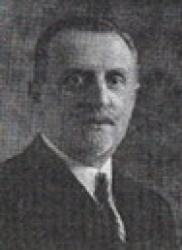
Nathan Kobrinsky
- Nikolai Ye. Kobrinsky
- Early Career and Academic Contributions
- Leadership in Economic Cybernetics
- Literary Contributions
- Popularization of Science
Nikolai Ye. Kobrinsky
Nikolai Ye. Kobrinsky was a renowned Russian scientist and popularizer of science in the field of economic cybernetics. He held a doctorate in technical sciences.
Early Career and Academic Contributions
Kobrinsky's career began in 1948 as Deputy Director for Scientific Affairs at the newly established Institute of Precision Mechanics and Computer Engineering of the USSR Academy of Sciences. In the 1950s, he taught theory of machines and mechanisms at the Penza Industrial Institute alongside Boris A. Trakhtenbrot. Co-authoring the monograph "Introduction to the Theory of Finite Automata," Kobrinsky and Trakhtenbrot made significant contributions to the field.
Leadership in Economic Cybernetics
From 1959, Kobrinsky returned to Moscow, heading the newly created Department of Electronic Computing Technology at the Moscow Institute of Engineering Economics (now State University of Management). He also taught economic cybernetics there. Kobrinsky served as Deputy Head of the Main Computing Center of the USSR State Planning Committee. In 1963, he led the first working commission tasked with developing the concept of the Unified State Network of Computing Centers (EGSVC), which later transformed into the idea of the Nationwide Automated System for Accounting and Information Processing (OGAS).
Literary Contributions
Kobrinsky authored several monographs. Notably, in the 1980s, he co-authored the textbook "Economic Cybernetics" with A.D. Smirnov and E.Z. Maiminas, which became a standard reference for economics and mathematics students throughout Russia and the CIS.
Popularization of Science
As a popularizer of science, Kobrinsky co-authored the book "Faster Than Thought" (1959) with Viktor Pekelis. Exploring mathematics, computing technology, and cybernetics, this book had a significant impact on the public's understanding of these fields. In 1969, he published "How Much Does a Man Need?" with his brother Aron Kobrinsky. This book provided insights into the principles of control systems in both machines and economics.