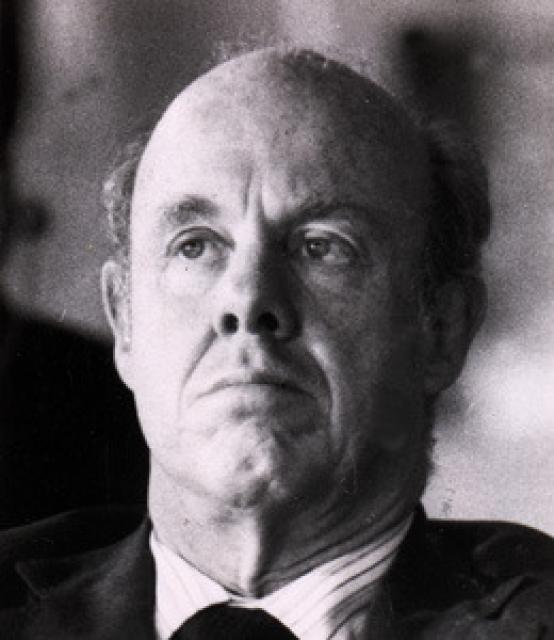
Nicanor Costa Mendez
 Argentina
- Early Life and Education
- Legal Career
- Diplomatic Prelude
- First Term as Foreign Minister (1966-1969)
- Second Term as Foreign Minister (1981-1982)
- Controversy and Resignation
- Later Life
Early Life and Education
Luis María Costa Méndez was born into an affluent family in Argentina. He graduated from the University of Buenos Aires School of Law in 1943 and established a legal practice.
Legal Career
As a corporate lawyer, Costa Méndez represented numerous foreign companies operating in Argentina. He also pursued academic interests, publishing two books on historical law and critically analyzing Arnold Toynbee's historical studies.
Diplomatic Prelude
From 1962 to 1964, Costa Méndez served as Argentina's ambassador to Chile.
First Term as Foreign Minister (1966-1969)
In 1966, Costa Méndez became Foreign Minister under General Juan Carlos Onganía, who had come to power through a military coup. He pursued an anti-communist policy and actively sought closer ties with the United States. In 1969, he signed an agreement establishing the Confederation of La Plata Basin countries with the foreign ministers of Brazil, Paraguay, and Uruguay.
Second Term as Foreign Minister (1981-1982)
In 1981, Costa Méndez was reappointed Foreign Minister by another military dictator, Leopoldo Galtieri. During this period, Argentina engaged in the Falklands War (April-June 1982) with Great Britain. Costa Méndez sought support from socialist countries during this conflict, visiting Cuba and meeting with Fidel Castro.
Controversy and Resignation
During the UN Security Council and Organization of American States meetings, Costa Méndez denounced the United States' actions as "treason against the rest of America." He resigned alongside Galtieri after Argentina's surrender on June 14, 1982.
Later Life
In 1983, a commission accused Costa Méndez of duplicity for assuring Galtieri that the US would not intervene in the conflict, despite evidence to the contrary from US Secretary of State Alexander Haig. His plans to publish his memoirs about the war were blocked by President Raúl Alfonsín's administration in an effort to improve relations with the UK.


