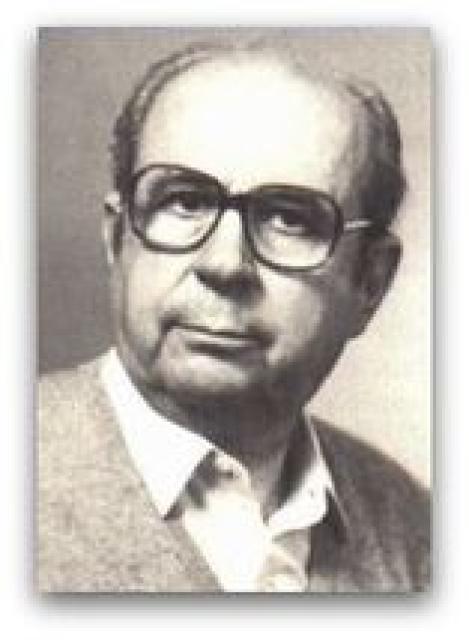
Nicholas Georgescu-Roegen
 Romania
Biography of Nicholas Georgescu-Roegen
Nicholas Georgescu-Roegen was a Romanian economist, mathematician, and statistician. He was born on February 4, 1906, in Constanta, Romania.
Education
Georgescu-Roegen studied at the University of Bucharest and later at the Sorbonne in Paris, France. He excelled in his studies and developed a deep interest in economics, mathematics, and statistics.
Academic Career
After completing his education, Georgescu-Roegen pursued an academic career. He became a professor at the University of Bucharest, where he taught economics and applied mathematics. His innovative research and unique perspective on economic theory gained him recognition within the academic community.
Emigration to the United States
In 1948, Georgescu-Roegen made the decision to emigrate to the United States. He accepted a position at Vanderbilt University in Nashville, Tennessee, where he continued his research and teaching. His contributions to the field of economics were highly regarded, and he became an influential figure within the American academic community.
Legacy
Georgescu-Roegen is best known for his work on the concept of entropy in economics. He argued that the Earth's resources are finite and that the traditional economic model of unlimited growth is unsustainable. His ideas challenged conventional economic thinking and laid the foundation for the field of ecological economics.
In recognition of his contributions to the field, the Southern Economic Association established the Georgescu-Roegen Prize in 1987. This prestigious award is given annually to an economist who has made significant contributions to the understanding of sustainability and resource depletion.
Nicholas Georgescu-Roegen passed away on October 30, 1994, leaving behind a lasting legacy as a pioneer in the field of ecological economics. His work continues to inspire and shape economic discourse, reminding us of the importance of considering the finite nature of our planet's resources.


