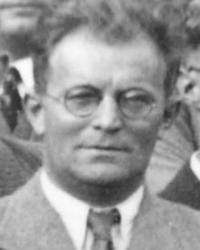
Nicolas Carnot
 France
Biography of Nicolas Carnot
Nicolas Carnot was a French physicist and engineer, recognized as one of the founders of thermodynamics. He was born on June 1, 1796, in Paris, into a highly accomplished family. His father was a distinguished military leader, politician, and scholar.
Carnot received his education at the Lycee Charlemagne before attending the Polytechnic School. After graduating in 1814, he was sent to the Engineering School in Metz. In 1816, he was appointed to the engineering corps, where he spent several years carrying out routine military engineering duties. Unsatisfied with the lack of opportunity for scientific research, he participated in a competition to fill a vacant position at the corps headquarters in Paris. After winning the competition, he relocated to the capital.
Continuing his education, Carnot attended lectures at the Sorbonne, College de France, and the Conservatory of Arts and Crafts. It was at the Conservatory that he met physicist N. Clement, who was studying the properties of gases. His interactions with Clement sparked Carnot's interest in improving steam engines, a topic that had also intrigued his father. In 1824, he published his work "Reflections on the Motive Power of Fire and on Machines Fitted to Develop This Power," where he examined the general problem of "obtaining movement from heat."
By considering the idealized Carnot cycle, he demonstrated for the first time that useful work could only be done when heat is transferred from a hotter body to a cooler one. He also proposed that the amount of work is determined solely by the temperature difference between the heat source and the heat sink, independent of the nature of the working substance (known as Carnot's theorem). Additionally, he introduced the concept of the mechanical equivalent of heat and formulated the law of conservation of energy in a generalized form.
Carnot had ambitious plans to further study the properties of steam and gases. However, he was unable to realize these plans as he passed away from cholera on August 24, 1832. According to the laws of that time, all his possessions, including his manuscripts, were destroyed. It was only two years later that his sole published work received recognition when B. Clapeyron presented it in mathematical form and introduced the graphical method to describe the Carnot cycle. Building on Carnot's ideas, later scientists such as R. Clausius and W. Thomson developed the second law of thermodynamics.