Nikolay Barabashov
 Ukraine
Biography of Nikolay Barabashov
Nikolay Pavlovich Barabashov was a renowned Soviet astronomer and the founder of the Kharkiv School of Planetary Science. He was born on March 18, 1894, in Kharkiv, Ukraine.
Early Life and Education
Barabashov grew up in a remarkable family. His father, Pavel Nikolaevich, was a famous figure in Kharkiv, having participated in the Russo-Turkish War. He was an ophthalmologist who worked at L.L. Girshman's clinic, where he developed a new method for treating the cornea. In addition to his medical career, Pavel selflessly assisted the local population, earning him nationwide recognition. Barabashov's mother, Valentina Vasilyevna, had studied piano at the conservatory but gave up performing to dedicate herself fully to her family and children. As a result, Nikolay received a solid musical education at home.
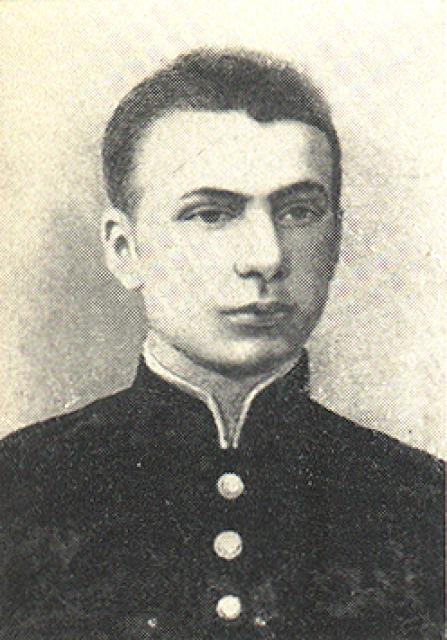
Barabashov attended the Kharkiv Gymnasium, where he excelled academically, but his thoughts were always focused on space. Since childhood, Nikolay had been captivated by the works of science fiction authors such as Jules Verne and Mayne Reid. However, it was Camille Flammarion's book "The Painter of the Universe" that determined his calling, and his dream became meeting the French poet of the cosmos. Accompanied by his father, Barabashov traveled to Paris, where Flammarion's observatory was located in the town of Juvisy, not far from the city. There, he finally had the long-awaited meeting with his idol. Inspired by this encounter, Nikolay Barabashov began to master the technique of photographing planets and independently built his own telescope on the roof of his house in 1916.
Contributions to Astronomy
Barabashov's notes started to be published in the Russian "News of the Russian Society of World Investigators" and the French "Astronomy" magazine. This drew the attention of Konstantin Tsiolkovsky, and a correspondence between Barabashov and the famous scientist ensued. After completing his studies at the gymnasium, Barabashov decided to enroll at the University of Tartu in Yuryev, which was renowned for its strong focus on astronomy. This marked the beginning of his transformation into a great astronomer and his eventual appointment as an academician of the Ukrainian Academy of Sciences.
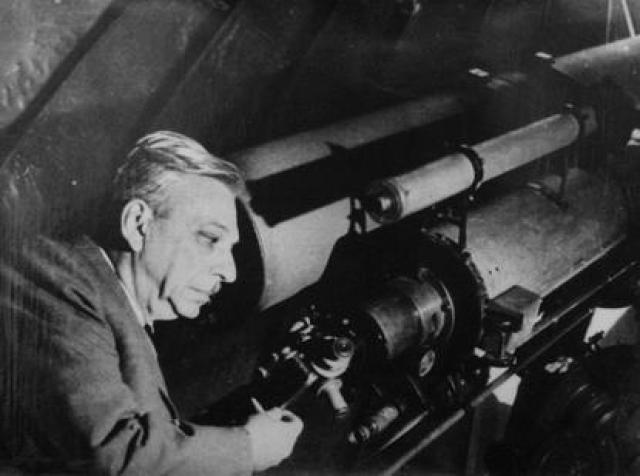
In 1917, Barabashov started working at the Kharkiv Observatory, which became the center of all his research. He made significant contributions to the field of planetary science, including the discovery of Earth's albedo law, photometric studies of the Moon's surface, the discovery of "polar caps" on Mars, the identification of ice crystals in Venus's atmosphere, and the photography of the solar corona, Jupiter, and Saturn.
In 1957, Nikolay Pavlovich became the founder of the Kharkiv Planetarium. Throughout his life, he dedicated himself to his beloved field of astronomy. He would leave his house on Pushkinska Street, one of the main streets in Kharkiv, early in the morning, often mentioned today in the "apartments for rent in Kharkiv" section, and return late in the evening after attending lectures, only to head straight to the observatory to study the night sky.
Nikolay Pavlovich Barabashov passed away on April 29, 1971. Craters on Mars and the Moon were named in his honor, as well as the largest wholesale market and metro station in Eastern Ukraine, both located in Kharkiv. His name is frequently seen in advertisements for "daily rent in Kharkiv near Academic Barabashov Metro Station."