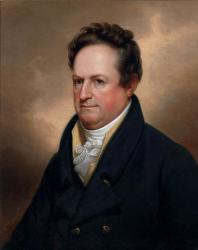
Nikolay Bobrikov
 Finland
Nikolay Bobrikov - Biography
Nikolay Ivanovich Bobrikov was a Russian military officer and statesman who served as the Governor-General of Finland from 1898. He was born on January 15, 1839, in Strelna, Russia. Bobrikov came from a military background, as his father, Ivan Vasilyevich Bobrikov, was a senior physician in the military hospital, and his mother, Alexandra Yegorovna Zeland, came from a reputable family.
Bobrikov received his education at the 1st Cadet Corps and graduated as a lieutenant in the 1st Grenadier Rifle Battalion on June 30, 1858. He continued his military training by studying cavalry service rules in the Leib Guard Ulan Regiment. In 1861, he became a cornet in the same regiment and was later promoted to lieutenant on April 21 of the same year. Bobrikov further pursued his military education at the Nikolaev Academy of the General Staff and graduated as a staff captain on November 9, 1864.
Throughout his career, Bobrikov held various positions, including overseeing the transportation of young soldiers via the Volga and Caspian Sea to reinforce the Caucasian Military District. For his success in this task, he was promoted to captain on October 28, 1865, and appointed as the acting senior adjutant of the Kazan Military District. He later became the chief of staff of the 22nd Infantry Division in June 1868 and was promoted to colonel on April 20, 1869.
On October 16, 1876, Colonel Bobrikov was appointed to serve with the Supreme Commander of the Danube Army, Grand Duke Nikolai Nikolaevich. The following year, he became the acting assistant chief of staff of the Guards Corps. During this time, he participated in the 1877-1878 campaign against the Turks. On January 1, 1878, Bobrikov was promoted to major general and later became a member of the Emperor's entourage on July 14. From February 26, 1884, until 1897, he served as the chief of staff of the Guards and the Petersburg Military Districts, receiving the rank of lieutenant general on August 30, 1884.
Bobrikov was promoted to general of infantry on December 6, 1897, and appointed as a member of the Military Council. In the same year, on August 17, he was granted the rank of general adjutant and assumed the position of the Governor-General of Finland and Commander of the Finnish Military District. On May 6, 1900, he became a member of the State Council while retaining his current position.
During his tenure as Governor-General, Bobrikov implemented a program aimed at centralizing power and promoting Russification in Finland. He abolished the independent Finnish army in 1901 and began conscripting Finns into the Russian army. He also enforced the use of the Russian language in the Senate, educational institutions, and administration. Bobrikov faced opposition from the Finnish population, and his policies led to unrest and protests.
On June 4, 1904, Bobrikov was assassinated by Eugen Schauman, the son of a Finnish senator, who opposed Bobrikov's policies. Schauman shot Bobrikov in the Senate building, and both Schauman and Bobrikov died from their injuries. The assassination was seen as a response to Bobrikov's repressive measures and his role in suppressing Finnish autonomy.
Nikolay Bobrikov was married twice. His first wife, Olga Petrovna Leontyeva, passed away in 1895. His second wife, whom he married on January 26, 1897, was Elizaveta Ivanovna Stahl von Holstein, the daughter of General Ivan Karlovich Stahl. Bobrikov had children from his first marriage, including Olga, Maria, Lyubov, and Nikolay, and one daughter, Elizaveta, from his second marriage.
Bobrikov's controversial policies and his assassination made him a significant figure in Finnish and Russian history. He is remembered for his attempts to suppress Finnish autonomy and impose Russification policies during his tenure as the Governor-General of Finland.