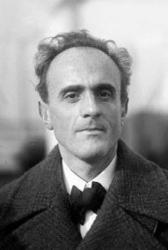
Paul Kammerer
 Austria
Biography of Paul Kammerer
Paul Kammerer was an Austrian biologist known for his experiments in which he attempted to breed amphibians in conditions that did not match their natural habitats. He studied the effects of such interventions on the resulting offspring in order to prove the Lamarckian theory of inheritance of acquired characteristics. However, the results of these experiments were deemed falsified or simply erroneous.
Unconventional Experiments
In his experiments, Kammerer grew various amphibians in environments that were not typical for their species. For example, he raised cave salamanders in light conditions, which led to the development of larger eyes and darker skin color than normal. Additionally, these salamanders began laying eggs instead of giving birth to live young. Kammerer believed that these environmentally-induced traits were inheritable. However, it was later revealed that these modifications were not heritable but rather examples of non-inheritable phenotypic plasticity.
Another experiment involved fire salamander larvae, which Kammerer raised on substrates of different colors. Depending on the color of the substrate, the offspring would predominantly display either yellow or black coloration. This effect became more pronounced in subsequent generations. However, Kammerer's interpretation of these changes as inheritance of acquired characteristics was a result of methodological errors in the experimental design, such as the use of genetically diverse individuals and subsequent "unconscious artificial selection."
Controversy and Tragic End
Six weeks after the publication of an article in the scientific journal "Nature" exposing the falsification of his experimental results, Kammerer took his own life. The controversy surrounding his work and the subsequent evidence of scientific misconduct likely contributed to his tragic decision.
Legacy
In 1926, Kammerer had planned to move to the Soviet Union to work in his own laboratory at the Communist Academy. He bequeathed his scientific library to the Communist Academy. Additionally, in 1928, a fictional film titled "Salamander" was made based on Kammerer's life, featuring a screenplay by Anatoly Lunacharsky and directed by Grigory Roschal.