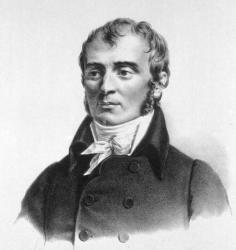
Nils Finsen
 Denmark
Biography of Niels Finsen
Niels Ruberg Finsen was a Danish physiotherapist who was awarded the Nobel Prize in Physiology or Medicine in 1903. He was born in Tórshavn, Faroe Islands, to parents of Icelandic descent. Despite his Icelandic heritage, Finsen grew up speaking Danish. After completing elementary school in Tórshavn, he enrolled in a preparatory school in Herlufsholm, Denmark. Finsen did not enjoy his time at the school and his academic performance suffered. However, his grades improved after transferring to a school in Reykjavik, where he also showed talent in marksmanship.
Throughout his childhood, Finsen's physical activity was limited due to poor health. Living in Iceland, just below the Arctic Circle, Finsen realized the importance of sunlight for all living things from an early age. He noticed that the longer he spent in the sun, the better he felt. This led him to conclude that living organisms were highly influenced by sunlight. "Let the sun suddenly break through the clouds on a gloomy day and see how everything changes around! Insects, just moments ago drowsy, will awaken and spread their wings; lizards and snakes will come out to bask in the sun; birds will chirp. And we ourselves will feel as if we have shed a heavy burden," he wrote.
Finsen enrolled at the University of Copenhagen in 1882 and began his medical studies at a time when the bacterial theory of diseases, thanks to the discoveries of Louis Pasteur and Robert Koch, was gaining prominence. In his first year in Copenhagen, Finsen experienced symptoms of an illness that was initially misdiagnosed as a heart condition. Later on, it was revealed that he suffered from Pick's pseudo-cirrhosis, a chronic progressive liver disease caused by pericarditis. Despite his deteriorating health, Finsen completed his studies and obtained his medical degree from the University of Copenhagen in 1891. He then secured a position as a prosector at the Department of Surgery.
Around the same time, Finsen began studying the therapeutic effects of light. Based on his previous research, he knew that light could inhibit the growth of certain bacterial colonies and even cause their destruction. In 1889, a Swedish scientist discovered that ultraviolet rays had a more powerful effect on biological tissues than infrared rays.
The Path to Phototherapy
Approaching the subject of his research as a true scientist, Finsen conducted observations on the effects of sunlight on insects, salamanders, tadpoles, and amphibian embryos. Through his experiments, he discovered that sunlight shining on the tail of a tadpole could cause tissue inflammation and that ultraviolet rays had a much stronger impact on frog embryos than infrared rays. He concluded that light, or the lack thereof, could have therapeutic effects.
By 1893, Finsen began advocating for the use of red light to treat the consequences of smallpox. He argued that only sunlight, filtered through a red light source, could accelerate the healing of skin lesions and prevent the formation of disfiguring scars. After successfully demonstrating the effectiveness of "red rooms," Finsen left his position at the university's Department of Surgery and dedicated himself entirely to the medical aspects of phototherapy. His articles on this topic in 1893 and 1894 further solidified his international reputation in the field.
Expanding the boundaries of his research, Finsen started experimenting with artificial light sources, particularly carbon arc lamps. He wanted to determine if they would be effective in treating lupus vulgaris, a skin disease caused by the tuberculosis bacterium that was difficult to treat and often left its victims disfigured and ostracized. In 1895, Finsen signed an agreement with the Copenhagen Electric Light Works to use their equipment for the treatment of lupus vulgaris. Patients underwent two-hour daily sessions of ultraviolet radiation from a direct current carbon arc lamp with a strength of 25 amperes.
Months later, the affected areas of the patients' skin began to diminish, and clear signs of recovery appeared. In 1896, the Finsen Institute of Phototherapy was established in Copenhagen, with Finsen as its director. The institute developed methods for treating patients using Finsen arc lamps, as well as therapeutic techniques that increased the therapeutic dose of ultraviolet radiation while minimizing tissue damage. Over the next five years, 800 lupus vulgaris patients underwent treatment at the Finsen Institute, with 50% achieving complete recovery and 45% experiencing significant improvement. Finsen's prediction that this disease would be eradicated in Denmark came true.
Nobel Prize and Later Years
In recognition of his contributions to the treatment of diseases, especially lupus vulgaris, using concentrated light radiation, Finsen was awarded the Nobel Prize in Physiology or Medicine in 1903. However, due to his declining health, Finsen was too ill to attend the award ceremony or deliver his Nobel lecture.
In an attempt to improve his health, Finsen experimented with various diets, alternating between consuming large and small quantities of salt or fluids. Despite his efforts, his condition continued to deteriorate. The summer of 1904 proved to be exceptionally sunny in Denmark. Finsen, still believing in the healing properties of sunlight, built a special room on the roof of his house in Copenhagen where he took sun baths. He passed away in Copenhagen, at the age of 43, in the arms of his wife, from Pick's pseudo-cirrhosis of the liver.
Throughout his short but fruitful life, Finsen received numerous awards and honors and was a member of several scientific societies, including those of Denmark, Iceland, Russia, and Germany. In 1899, he was knighted with the Order of the Dannebrog, and in 1904, he received the Cameron Prize and the honorary privilege of delivering lectures at the University of Edinburgh.