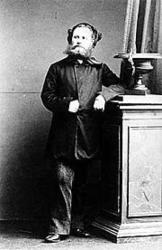
Omar Nelson Bradley
 USA
USA- Biography of Omar Nelson Bradley
- Early Life and Education
- Military Career
- In 1951, his memoir "A Soldier's Story" was published.
Biography of Omar Nelson Bradley
Omar Nelson Bradley was an American military leader, a five-star general of the United States Army (born September 20, 1950), and one of the key commanders of the US Army in North Africa and Europe during World War II. After the war, he served as the Chief of Staff of the Army and in 1949, became the first Chairman of the Joint Chiefs of Staff. He is the last American military leader to hold the rank of General of the Army (5 stars) to date.

Early Life and Education
Omar Nelson Bradley was born on February 12, 1893, in a poor family in Clark, Missouri. When Bradley was 14 years old, his father passed away, leaving him and his mother in difficult times. After graduating from high school in Moberly in 1910, Bradley started working in a railroad workshop to support his family and save money for university. However, the director of a local Sunday school advised him to take the exams for admission to West Point, as he was a friend of Bradley's father. Bradley wrote a letter to the congressman of his district, asking for a recommendation to the United States Military Academy at West Point. But it turned out that the candidate from the state was already selected, and Bradley was offered to try his luck as an alternate candidate. This news greatly disappointed Bradley. The exams were in a week, and he couldn't quit his job to prepare for them. Besides, there was no money for a ticket to St. Louis, where the exams were taking place. The whole endeavor seemed like a useless waste of time to young Bradley. Despite this disappointment, Bradley went to his father's friend for advice. Three weeks later, Bradley was informed that the primary candidate had failed the exams. The three years of study at West Point gave Bradley a lot, providing him with an excellent general education and profound knowledge in the field of military science. At West Point, he befriended Dwight Eisenhower, a future renowned commander and hero of America. Later, their friendship turned into fruitful collaboration. Bradley and Eisenhower understood and supported each other. Bradley graduated from the academy with honor, ranking 44th out of 164 cadets. During his cadet years, he excelled in football and baseball, which he promoted throughout his life as essential means for fostering team spirit.
Military Career
Bradley began his military service in a garrison in Washington state in 1916 and participated in the border conflict with Mexico. Right after the United States entered World War I, Bradley started requesting transfer orders to Europe. However, instead of going to the front, Bradley spent the entire First World War in the United States, which was quite disappointing for him. As he dreamed about the front, he commanded a company that guarded copper mines in Butte.
In August 1918, Bradley was appointed commander of a battalion preparing for deployment to France, but then the armistice was signed, and instead, young Captain Bradley had to teach military science to students at the University of South Dakota. In September 1920, Bradley became a mathematics instructor at West Point. The superintendent of the academy at that time was Douglas MacArthur, whose meetings with Bradley and others would later contribute to the careers of many future military leaders, including Eisenhower.
During this time, Bradley got acquainted with General Marshall, who noticed his talent and potential. General Marshall did a lot for Bradley, teaching him how to build proper relationships with subordinates. West Point was a center of military thought, and Bradley immersed himself in theoretical debates. He came to the early conclusion that most American and world authorities exaggerated the importance of the positional warfare experience of 1914-1918. His idol was Civil War cavalry general William Sherman, who became famous for his swift raids behind enemy lines.
In the summer of 1938, Bradley received an assignment to the staff of the US Army Ground Forces. In 1940, Marshall became the Chief of Staff of the United States Army and transferred Bradley from the Personnel Division of the War Department to his own office as an assistant to the Secretary of the General Staff. A year later, Omar was appointed as the Commandant of the Infantry School and promoted to the rank of brigadier general. When World War II was declared, Bradley commanded the 82nd and 28th Infantry Divisions for some time.
In 1943, he became the deputy commander of the Allied forces in North Africa, where he pursued the remnants of Rommel's army in southern Tunisia. During the Tunisian and Sicilian operations, Bradley commanded the corps of General Patton, whom Bradley replaced when Patton was promoted.
Showing courage, resourcefulness, and excellent organizational skills, Bradley captured Messina five weeks after the landing, which saved a significant number of American soldiers' lives.
In Normandy, Bradley was the commanding general of the First Army. His soldiers were the first to land on the French beach and endured heavy fighting on Omaha Beach. The capture of Cherbourg port followed. Bradley actively participated in the planning of the operation that allowed the Allies to seize this strategically important objective. By the beginning of July 1944, the number of troops advancing into the continent had significantly increased. On June 9, Bradley moved his command post to the continent. On August 1, Eisenhower formed the 12th Army Group, the largest American unit in history, consisting of four armies, 48 divisions, and 1.3 million personnel. Bradley became the commander of the 12th Army Group. After liberating Paris, he led his troops towards the German border. Despite fierce enemy resistance and the German counteroffensive in the Ardennes at the end of 1944, Bradley broke through the Siegfried Line and crossed the Rhine in early 1945. On August 15, 1945, President Truman appointed Bradley as the head of the Veterans Administration. Under his supervision were 17 million former servicemen who needed assistance in reintegrating into civilian life.
In February 1948, Bradley succeeded Eisenhower as the Chief of Staff of the United States Army, and in August 1949, he became the first Chairman of the Joint Chiefs of Staff in history, unifying the leadership of all branches of the US armed forces.
On September 22, 1950, Congress awarded Bradley the rank of General of the Army.
In 1951, his memoir "A Soldier's Story" was published.
On August 15, 1953, Bradley retired from military service. He lived for another 28 years, advising several presidents, guiding soldiers, and consulting on war movies in Hollywood.
Starting in 1958, he became the chairman of the board of the Bulova Watch Company, involved in arms production.
Bradley's last public appearance was on January 20, 1981, during the inauguration of President Ronald Reagan. Omar Nelson Bradley passed away in New York on April 8, 1981, and was buried at Arlington National Cemetery alongside his two wives. On December 28, 1916, Bradley married Mary Elizabeth (Bradley) Quayle. On December 1, 1965, Mary Bradley passed away from leukemia. On September 12, 1966, Omar Bradley married for the second time to Esther Dora "Kitty" Buhler (Bradley), until his death. The Bradley Fighting Vehicle of the US Infantry is named in honor of Omar Bradley.
On May 5, 2000, the United States Postal Service issued a series of stamps called "Distinguished Soldiers," which included Omar Nelson Bradley.
Bradley's posthumous autobiography, "A General's Life," was published in 1983 by Clay Blair. The Class of 1915 at West Point was called the "Stars Upon Thars," as it produced many future military leaders, including Eisenhower and Bradley.
Bradley and Patton became the most prominent American military leaders of World War II, complementing each other throughout the war. It is worth noting that unlike many other military commanders who disregarded the lives and well-being of their subordinates in pursuit of their objectives, Bradley always tried to minimize casualties and avoid unnecessary risks. This endeared him to the soldiers, who appreciated his leadership.
It should be noted that Bradley's military operations took place under the intense resistance of the Nazis. However, under any circumstances, the commander remained calm and made the right decisions while leading large masses of people. Bradley also demonstrated excellent diplomatic skills, establishing rapport with allies and ensuring the observance of all political norms and rules.
After Bradley was promoted to General of the Army, he became the last American military leader to hold this rank and the only one to receive it after the end of World War II.
During World War II, Bradley was awarded two Soviet orders - the Order of Suvorov 1st class and the Order of Kutuzov 1st class, making him the most decorated US Army general by the USSR.