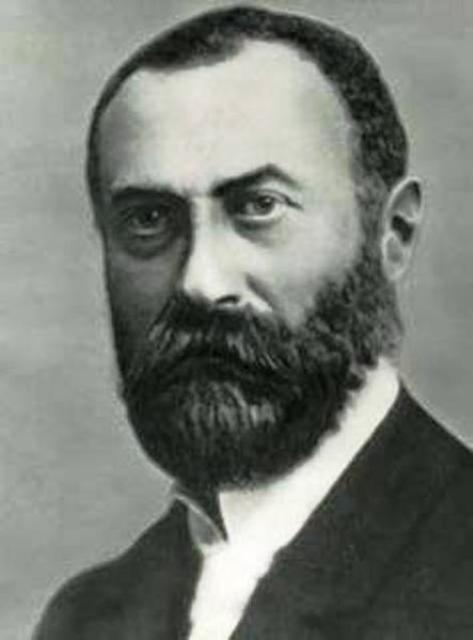
Otto Titusz Blathy
 Hungary
- Hungarian electrical engineer and chess composer
- Electrical engineering achievements
- Chess composing career
- Honors and legacy
Hungarian electrical engineer and chess composer
Ottó Titusz Bláthy (born October 11, 1860, Tata, Hungary – died September 23, 1939, Budapest, Hungary) was a Hungarian electrical engineer and chess composer. He is best known for his inventions in the field of electrical engineering, including the development of the closed-circuit transformer and the induction meter for alternating current.
Electrical engineering achievements
In 1885, Bláthy collaborated with Károly Zipernowsky and Miksa Déri to invent the closed-circuit transformer, which revolutionized the transmission of electrical energy. In 1889, he invented the induction meter for alternating current, which is still known as the "Bláthy meter." He also designed generators, turbogenerators, transformers, and other electrical equipment for power plants.
Chess composing career
Bláthy was also a prolific chess composer, publishing over 400 compositions from 1879 onwards. He was renowned for his specialty in composing "monster" problems, with one of his most famous being "Mate in 257 moves." The sum of the moves in the main lines of solutions of all his problems reached a record-breaking 25,000 moves.
Honors and legacy
Bláthy's contributions to electrical engineering and chess composition earned him numerous honors. He was elected an honorary member of the Hungarian Academy of Sciences and received honorary doctorates from the Technical University of Budapest and the Technical University of Vienna. His inventions and compositions continue to inspire and influence professionals in both fields.



