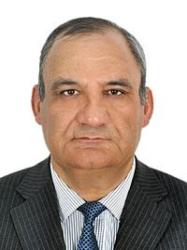
Ouen Richardson
 Great Britain
- Biography of Owen Richardson
- Early Life and Education
- Contributions to Physics
- Later Career and Honors
- Later Life and Legacy
Biography of Owen Richardson
Owen Willans Richardson was an English physicist and Nobel laureate in Physics in 1928.
Early Life and Education
Owen Willans Richardson was born in Dewsbury, Yorkshire, England, as the only son of Joshua Henry Richardson and Charlotte Maria Richardson. He received a scholarship at the age of 12 to attend Batley Grammar School, where he excelled academically. In 1897, Richardson received a full scholarship to Trinity College, Cambridge University, where he studied in the Cavendish Laboratory under the guidance of J.J. Thomson. He earned his bachelor's degree in 1900 and remained at Cambridge as a research assistant and later as a professor at Trinity College.
Contributions to Physics
In 1901, Richardson formulated the Richardson's Law, which describes the emission of electrons from heated metal surfaces. He conducted numerous experiments to validate this law, which states that the emission rate of electrons increases with the temperature of the surface. Richardson's research also focused on various phenomena such as the photoelectric effect, interaction of X-rays with matter, light emission, gyroscopic magnetism, and thermodynamics.
In addition to his work on electron emission, Richardson published several papers on the relationship between physics and chemistry, particularly in the study of molecular structure.
Later Career and Honors
In 1906, Richardson became a professor of physics at Princeton University. He continued his research and teaching career at Princeton, mentoring notable students such as Robert H. Goddard, Karl T. Compton, and Arthur H. Compton.
In 1913, Richardson was elected a fellow of the Royal Society and was offered a physics chair at King's College, London University. However, his research was interrupted by the outbreak of World War I. During the war, Richardson contributed to the development of electronic devices for military communication.
After the war, Richardson focused on the theoretical and experimental study of atomic and molecular structure. He was awarded the Nobel Prize in Physics in 1928 for his work on thermionic phenomena and the discovery of the Richardson's Law.
Later Life and Legacy
After retiring from King's College in 1944, Richardson moved to Chandos Lodge, his country home near Alton, Hampshire. He continued his research on molecular structure and was known for his love of nature and long walks. Richardson passed away on February 15, 1959, at his home.
During his career, Richardson received numerous honors and awards, including the Hughes Medal from the Royal Society in 1920. He was an honorary doctor of St. Andrews University, University of Leeds, and the University of London. He was a member of the American Philosophical Society and academies of sciences in Norway, Sweden, Germany, and India.