Oyama Masutatsu
 North Korea
- Oyama Masutatsu: The Legendary Master of Karate
- Early Life and Education
- The Path to Karate Excellence
- The Birth of Kyokushin
- Legacy and Contributions
Oyama Masutatsu: The Legendary Master of Karate
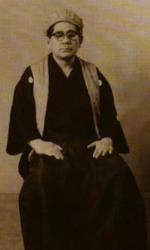
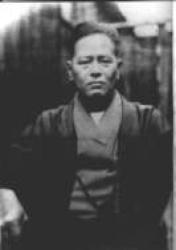
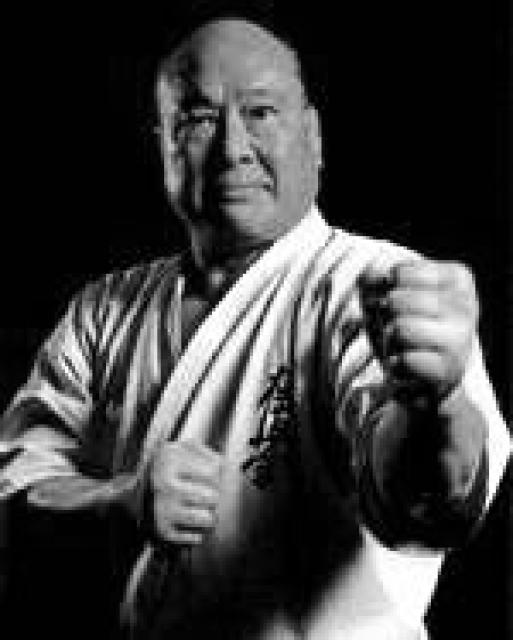
Oyama Masutatsu (1923-1994), also known as "The Divine Fist," was a legend in modern karate and the founder of Kyokushin Budo Karate. He played a significant role in reviving the true spirit of Budo and bringing karate back to its roots.
Early Life and Education
Oyama was born in Korea in 1923 and completed his secondary education in Seoul. At the age of 15, in 1938, he traveled to Japan and enrolled at Takushoku University in Tokyo in 1941. There, he studied karate under the guidance of Funakoshi Yoshitaka and soon achieved the rank of 2nd dan.
In 1943, he interrupted his studies to join the army, where he continued to practice karate, this time in the Goju-Ryu style. By the end of the war, Oyama had reached the rank of 4th dan.
The Path to Karate Excellence
In 1948, Oyama secluded himself in the mountains, dedicating his life to the path of a hermit. Upon his return to society in 1949, Oyama began organizing demonstration matches with bulls to popularize and promote karate. He participated in a total of 52 such battles, and in three of them, he killed the bull with his bare fists. Thanks to extensive media coverage and the support of film companies, Oyama became famous throughout Japan.
During the 1950s, Oyama could often be found at the Godzukan Dojo in the Asakusa district of Tokyo, where the legendary "Cat" Yamaguchi had settled after the war. In 1956, a demonstration and sparring match between Oyama and the head of the Goju-Ryu school, Yamaguchi Gogen, was organized by the newspaper "Toke Mainichi Shimbun." Two years earlier, Yamaguchi had awarded Oyama the rank of 7th dan in Goju-Ryu and the title of Keshi.
Starting in 1952, Oyama embarked on a series of international tours to promote his new style of karate, creating a sensation in the West. He broke thick boards and stones, crushed tiles, and even broke bull's horns, captivating the imaginations of spectators.
The Birth of Kyokushin
In 1954, Oyama opened his first dojo upon returning to Japan, which soon became a mecca for fighters from all over the country. Students were drawn to Oyama not only by his mastery but also by his revolutionary approach to karate as a martial art. Those who trained with Oyama during this period went on to become brilliant masters and established the reputation of Kyokushin. However, the name Kyokushin did not exist yet in the 1950s, and the style was simply referred to as "Oyama Karate." Since then, Kyokushin has become one of the largest karate styles.
Oyama taught thousands of students, but only a few had the opportunity to witness his sparring skills. In 1956, Oyama suffered a severe knee injury, and after that, he rarely engaged in serious fights. Only those who trained with him between 1954 and 1956 can truly describe his fighting style.
Legacy and Contributions
In 1963, Oyama built the headquarters (Hombu) of his karate school, which was officially named Kyokushin Kaikan - The Palace of the Society of Absolute Truth in 1964.
In 1966, a small team of Oyama's students, including Kurasaki Kenji, Nakamura Tadashi, and Fujihira, accepted a challenge from Muay Thai representatives in Bangkok. They emerged victorious with a score of 2:1, further cementing the reputation of karate.
From 1969, with the first All-Japan Open Karate Tournament, Kyokushin's competitive development began. Similar championships became an annual occurrence, culminating in the First World Open Karate Championship in 1975.
Oyama continued to train until the final days of his life, serving as a shining example of a true Budo master. His dedication and self-discipline were unparalleled, and he emphasized the importance of training tirelessly and with a strong sense of self-sacrifice to achieve mastery on the chosen path.