Paul Gilson
 Belgium
- A musical start in Ruisbroek
- The breakthrough of *La Mer*
- Teacher and mentor
- War, controversy and later years
Paul Gilson helped shape Belgian musical life as a composer, teacher, critic and advocate for wind-band music. His early success with *La Mer* brought him to public attention, while his teaching influenced a generation of younger composers. His career also unfolded amid Belgium’s cultural tensions and the political upheavals of the First World War, which affected his public standing.
A musical start in Ruisbroek
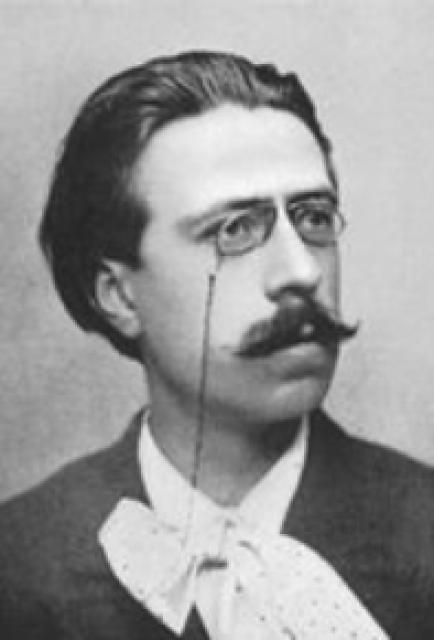
Gilson was born in Brussels on 15 June 1865, the son of a clerk. The family moved to Ruisbroek in Brabant when he was an infant. There he received his first musical instruction from Auguste Cantillon, a local church organist and bandleader, learning piano, music reading and basic harmony. Around 1880, he began composing for choir and local wind band.
That early experience left a lasting mark. Gilson became one of Belgium’s first composers to write ambitious original works for wind and percussion, earning a reputation as a founder of the country’s concert band tradition. Even his symphonic music showed a particular skill in writing for the wind section.
After his father died in 1882, Gilson returned to Brussels. He studied harmony with Charles Duyck and composition with François-Auguste Gevaert at the Brussels Conservatory, though much of his musical education was self-directed. He immersed himself in concert life, drawn to Wagner’s operas and the colorful orchestration of Russian composers. In 1889, he won Belgium’s Prix de Rome with the cantata *Sinaï*, following an earlier attempt interrupted by illness.
The breakthrough of *La Mer*
Gilson’s early works included songs, orchestral pieces and dramatic cantatas. His major breakthrough came with *La Mer: Esquisses symphoniques* (*The Sea: Symphonic Sketches*), premiered in Brussels on 20 March 1892. Its acclaim established him on the Belgian concert scene. The score’s vivid evocation and descriptive character became central to its appeal, though some reviewers later criticized those same qualities in his 1895 oratorio *Francesca da Rimini*.
He continued writing large-scale works, including the ballet *La Captive* and the operas *Prinses Zonneschijn* and *Rooversliefde*. But after the turn of the century, teaching and administrative work increasingly shaped his time. In 1900, he became a harmony teacher at the Brussels Conservatory, and two years later took a similar post in Antwerp. In 1909, he became inspector of Flemish music education, with responsibility for music education in the Walloon provinces added in 1912.
Teacher and mentor
Gilson’s influence extended well beyond his own scores. He taught many of the Belgian composers who came of age between the world wars, privately as well as in institutions. In 1925, a circle of his students formed the group known as Les Synthétistes, among them Marcel Poot, Gaston Brenta and René Bernier. The group promoted a modern Belgian musical identity while drawing on the traditions of the past.
Gilson also wrote music criticism, published textbooks and helped found *La Revue Musicale Belge*, serving as its artistic director. His work for wind ensembles remained especially important, alongside compositions for orchestra, stage and chamber groups.
War, controversy and later years
The First World War interrupted public musical life, and in 1918 Gilson was appointed acting director of the Royal Flemish Conservatory by the German occupation authorities. After the war, he was indicted on a charge of collaboration and lost his official functions for three years. His appointment had become entangled in political and linguistic conflicts that extended beyond music.
Gilson married singer and singing teacher Celina Stoops in London in 1937. He retired from his inspector role in 1930 but continued teaching, writing and composing when his health allowed. He died at his home in Schaerbeek on 3 April 1942.
Gilson is remembered both for *La Mer* and for the institution-building work that shaped Belgian music. His wind-band repertoire opened new possibilities for the medium, and his students carried his influence into the next generation. His story also reflects how artistic careers in Belgium were bound up with the country’s linguistic divides and political history.