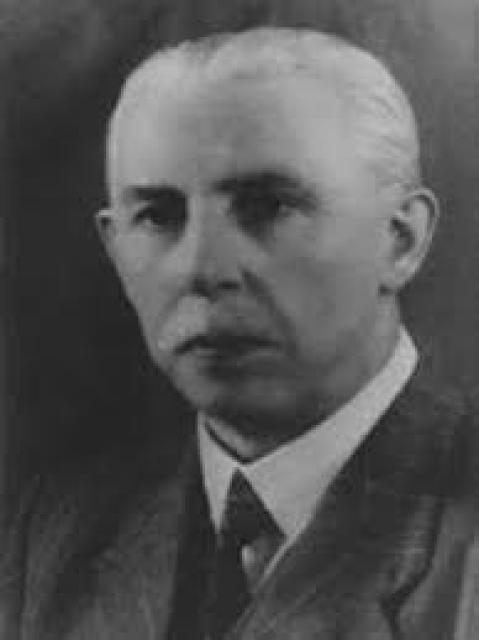
Paul Guthnick
 Germany
- Early Life and Education
- Career at the Berlin Observatory
- Contributions to Photoelectric Astronomy
- Research on Stellar Phenomena
- Honors and Affiliations
Early Life and Education
Paul Guthnick was born in Hitdorf, near Cologne, Germany. He completed his studies at the University of Bonn in 1901 and subsequently worked as an assistant at the Berlin Observatory and the private observatories of Auvers and Bothkamp.
Career at the Berlin Observatory
In 1906, Guthnick joined the Berlin Observatory, which was later relocated to Babelsberg in 1913. In 1921, he succeeded G.O. Struve as the observatory's director. Concurrently, he became a professor at the University of Berlin in 1916.
Contributions to Photoelectric Astronomy
Guthnick was a pioneer in utilizing photoelectric techniques to measure the brightness of celestial objects. Inspired by the work of Elster and Geitel on photoelectric cells, he developed a stellar photometer in 1912.
In collaboration with R. Prager, Guthnick initiated systematic observations of variable star brightness. Their groundbreaking research laid the foundation for photoelectric astrophotometry, significantly enhancing the precision of brightness measurements compared to visual and photographic methods.
Research on Stellar Phenomena
Guthnick conducted comprehensive studies on variable stars, spectroscopic binaries, novae, planets, asteroids, and their satellites. He notably proposed theories on the variability of Cepheid and long-period variable stars. Additionally, he performed the first determinations of stellar colors using photoelectric techniques.
Honors and Affiliations
Guthnick was a member of the Berlin Academy of Sciences, the Bavarian Academy of Sciences, the German Academy of Natural Scientists, and the Pontifical Academy of Sciences. He was also one of the founders of the German Astronomical Society.


