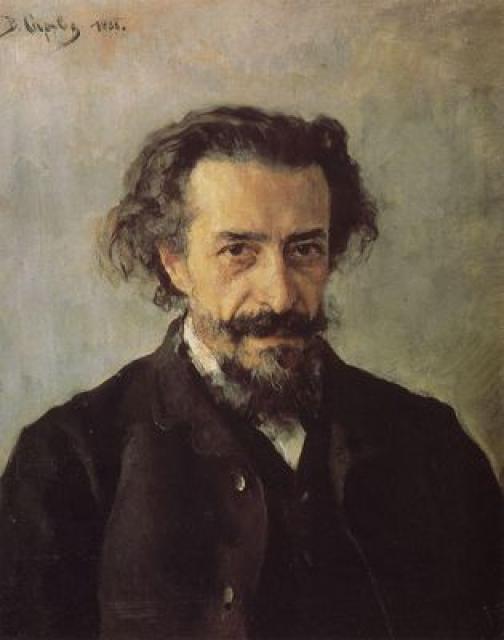
Pavel Blamberg
 Russia
- Biography of Pavel Blaramberg
- Statistics and Social Work
- Musical Development
- Composition and Performance
- Artistic Significance
- Final Years and Legacy
Biography of Pavel Blaramberg
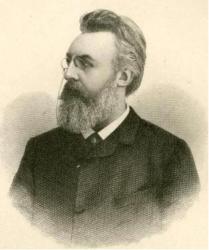
Early Life and EducationPavel Blaramberg was born on September 14, 1841, in Saint Petersburg. He received his formal education at the Alexander Lyceum, where he first demonstrated his musical inclinations by organizing a string orchestra from his fellow students. Despite limited musical training, Blaramberg began composing operatic works as a teenager.
Statistics and Social Work
After graduating, Blaramberg embarked on a career in statistics, working at the Central Statistical Committee. However, he remained committed to music and dedicated himself to teaching in Sunday schools and organizing free reading centers.
Musical Development
In the late 1850s, Blaramberg encountered Mily Balakirev's circle and received guidance in piano playing. Through practical observation and experimentation, he honed his skills in orchestration and composition. Drawing inspiration from Russian folk music and the works of German classical composers, he crafted a unique musical style.
Composition and Performance
During his stay in Brussels, Blaramberg composed the cantata "The Demon" and the first half of the opera "Maria Tudor." Upon returning to Moscow, he became a staff writer for "Russkie Vedomosti" and a member of the Philharmonic Society's music academy. His later works include operas, symphonies, and choral compositions.
Artistic Significance
While Blaramberg lacked extraordinary creative talent, his unwavering dedication to his art resulted in notable contributions to Russian music. Influenced by Balakirev's circle, his works incorporated народный style both melodically and technically, helping to shape the nascent Russian national musical school.
Final Years and Legacy
In 1898, Blaramberg retired to his estate in Crimea. He passed away in Nice, France, on March 15, 1907. Despite the fact that many of his works were lost over time, Blaramberg's legacy stands as a testament to his passion and the diverse musical contributions he made during a remarkable era in Russian music history.