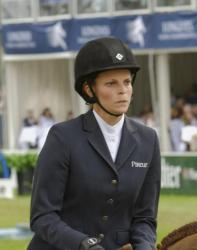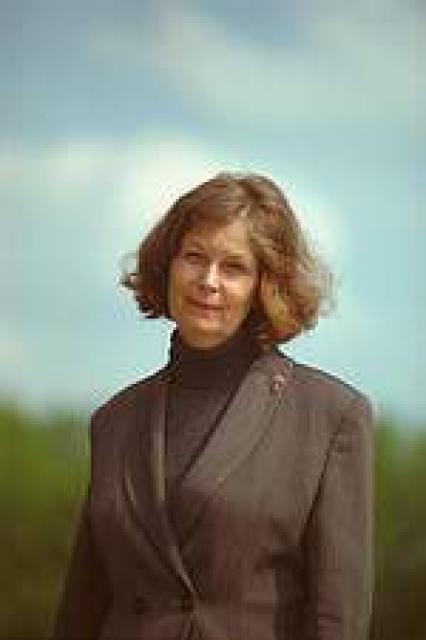
Phelicitas Fon Nostits
 Germany
Biography of Felicitas von Nostitz
Felicitas von Nostitz was born on November 4, 1944, in Zeigmaringen, near Ulm, Germany. She comes from a diplomatic family, with her great-grandfather, Georg Munster, serving as a diplomat in St. Petersburg in the mid-19th century. It was during a formal ball that he met the young Princess Alexandra Golitsyna, the granddaughter of Alexander Suvorov, a renowned Russian military commander. Alexandra was married to the elderly Prince Dolgorukov at the time, but after his death, Munster married her and brought her back to Germany. They were married in the summer of 1847 in Weimar, following the traditions of both the Russian Orthodox and Lutheran (Protestant) churches. They settled in the Munster family castle, Dernburg.
Felicitas von Nostitz, also known as Alexandrine, was born into this noble lineage. She grew up with stories and anecdotes about Suvorov, the military genius who never lost a battle. Felicitas was captivated by the enigmatic and romantic image of her ancestor. She later met Felicitas at a conference in Berlin and was drawn to her beauty, nobility, simplicity, and mystery.
Felicitas' family history was filled with mystical and tragic tales. There were two curses that haunted her family. The first curse was said to have been sent upon Suvorov for his victory at the Battle of Warsaw. The curse was said to affect five generations of his descendants. The second curse was supposedly sent by nuns who were expelled from a monastery that was later rebuilt into the family castle, Dernburg. Numerous family members claimed to have encountered spirits and ghosts within the castle's walls.
Felicitas was particularly fascinated by her great-grandmother, Alexandrine Golitsyna, the granddaughter of Suvorov. She was known for her eccentric personality, often appearing at hunts dressed in men's clothing and shooting pistols out of the castle's windows. She was also a lover of music and organized grand balls in Dernburg. Felicitas saw these stories as a connection to her Russian heritage and felt a strong affinity towards her ancestors.
Felicitas' interest in history and her Russian roots led her to study Russian literature and history. She became fluent in the Russian language and developed a deep appreciation for Russian culture. Her first trip to St. Petersburg in 1966 further solidified her love for Russia. She felt an immediate connection to the city and its people, and she fell in love with the dreamlike quality of Russian art and literature.
Felicitas' passion for Russian culture extended to her career as a journalist. She wrote extensively about Russian filmmakers, artists, and writers, including Andrei Tarkovsky. She co-authored a book about Tarkovsky with Maya Turovskaya, exploring the connections between his work and German romanticism. Felicitas also explored the world of Orthodox Christianity during her travels and saw it as another rich aspect of Russian culture.
Throughout her life, Felicitas has seen her Russian heritage as both a burden and a source of inspiration. She has embraced the role of being a "little bridge" between Germany and Russia, using her knowledge and understanding of both cultures to promote mutual understanding. Felicitas believes that her ancestors have given her a spiritual wealth that has shaped her identity.
In addition to her journalistic career, Felicitas is also known for her culinary skills. She loves cooking and often prepares warm meals for her children. Despite her noble lineage, Felicitas does not employ a large staff and prefers a more modest lifestyle.
As she reflects on the current situation in Russia, Felicitas acknowledges the complexity of the country's challenges. She believes that the fate of Russia is a secret law of history, and she watches from Germany, hoping for a positive outcome. Felicitas sees herself as a part of the Russian soul, deeply connected to its history and culture. Her Russian friend once told her that she had already lived on their fields, signifying the deep spiritual connection she feels to her Russian roots.