Philip Noel-Baker
 Great Britain
- Biography of Philip Noel-Baker
- Education and Early Career
- World War I and Post-War Involvement
- Academic and Political Career
- International Contributions
- Legacy and Death
Biography of Philip Noel-Baker
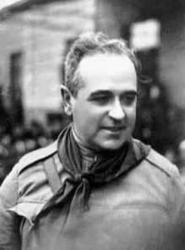
Philip Noel-Baker was a British politician and public figure. He was born into a large and religious family of Canadian Quakers. His father moved from Canada to England, where he became a successful industrialist, social activist, and committed pacifist. From 1895 to 1907, Philip Noel-Baker served in the London City Council, and from 1905 to 1918, he was a Member of Parliament in the House of Commons.
Education and Early Career
Philip Noel-Baker received his early education in Quaker schools in York and Pennsylvania, USA. He then graduated with distinction from the History (1910) and Economics (1912) faculties at King's College, Cambridge, in the United Kingdom. In 1911 and 1913, he was a recipient of the Whewell scholarship for international law. After completing his university studies, he spent some time studying in Paris and Munich. He was also actively involved in athletics, serving as the president of the Cambridge Athletic Club from 1910 to 1912. He participated in the Olympic Games in Stockholm (1912) and captained the British Olympic team in Antwerp (1920) and Paris (1924) for track and field events. In 1914, he graduated with honors and became the vice-rector of Ruskin College, Oxford University.
World War I and Post-War Involvement
During World War I, Noel-Baker organized and led field hospitals on the French front (1914–1915) and the Italian front (1915–1918). He was awarded French and Italian military orders for his service. In 1915, he married Irene Noel, the daughter of an English landowner who had settled in Greece. After the war, he played an active role in the establishment of the League of Nations and the United Nations. From 1918 to 1919, during the Paris Peace Conference, he worked as an assistant to Lord Robert Cecil, the chairman of the committee responsible for drafting the League of Nations Covenant. From 1920 to 1922, he served as a member of the League of Nations Secretariat and from 1922 to 1924, he was the private secretary to the British representative to the League's Council and Assembly. He also advised F. Nansen on refugee and prisoner of war affairs. From 1929 to 1931, he was part of the British delegation to the League's Assembly, and from 1931 to 1932, he served as the assistant to Arthur Henderson, who led the Disarmament Conference.
Academic and Political Career
From 1924 to 1929, Noel-Baker taught international law at the University of London and the Academy of International Law in The Hague. He published several scholarly works during this time. In 1933-1934, he lectured at Yale University in the United States as the Dodge Lecturer. In the 1920s, he joined the Labour Party. From 1929 to 1931, he was a Member of Parliament for Coventry, and from 1936 to 1950, he represented Derby County. From 1950 to 1970, he represented the interests of South Derbyshire in the British Parliament. During World War II, he served as the secretary of the parliamentary commission on military transport. In 1946, he became the leader of the Labour Party.
International Contributions
Noel-Baker's work extended beyond domestic politics. From 1945 to 1946, he participated in the development of the United Nations' fundamental principles and the drafting of its Charter. He played a key role in establishing a code of conduct and defining the rights and responsibilities of UN staff, considering it a precursor to a global civil service. He later served as the British delegate to the UN Economic and Social Council. He proposed the integration of the economic potential of the occupation zones in Germany and advocated for the reinstatement of "Nansen passports" for refugees. He focused on combating poverty, assisting refugees, and controlling the arms trade. In 1958, he published the book "The Arms Race: A Programme for World Disarmament," which earned him the Albert Schweitzer Prize in 1961. In 1960, Noel-Baker was elected President of the International Council of Sport and Physical Education under UNESCO.
Legacy and Death
Philip Noel-Baker died in London in 1982. His main credo in life was the belief that "War is a cursed abominable thing that has destroyed many civilizations." Among his notable works are "The Arms Race: A Programme for World Disarmament" (1958), "The Geneva Protocol for the Pacific Settlement of International Disputes" (1925), "Hawkers of Death: The Private Manufacture and Trade in Arms" (1934), and "The League of Nations at Work" (1926).