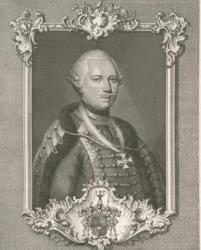
Philipp Ornano
 France
Biography of Philippe Ornano
Philippe Ornano was a count and divisional general, as well as the cousin of N. Bonaparte. He began his military service on March 31, 1799 as a sub-lieutenant in the 9th Dragoon Regiment. From 1799 to 1800, he fought in Italy. In October 1801, he joined General Leclerc's expedition to Santo Domingo. Upon his return on January 8, 1803, he was assigned to the General Staff of the army.
On July 15, 1803, Napoleon appointed him as the senior aide-de-camp, replacing Colonel Sebastiani. From February 3, 1805, he was transferred to the staff of Marshal Berthier, the Minister of War. On March 24, 1805, he became the commander of the 3rd battalion of the light infantry regiment in General Legrand's division. From 1805 to 1808, he participated in the campaigns of the Great Army, distinguishing himself in the battles of Austerlitz, Jena, Lubeck, and Friedland.
On January 18, 1807, Ornano became the colonel of the 25th Dragoon Regiment. From 1808 to 1812, he participated in military operations in Spain and Portugal, distinguishing himself in the battles of Alba de Tormes and Ciudad Rodrigo. During the Battle of Fuentes de Onoro on May 5, 1811, he was promoted to brigadier general on the battlefield. On June 16, 1811, he was confirmed as a brigadier general of the Imperial Guard.
From March 24, 1812, Ornano commanded the 16th brigade of light cavalry. He took part in the campaign in Russia in 1812, distinguishing himself in the battles of Mogilev. During the Battle of Borodino on September 7, 1812, after General Latur-Maubourg was wounded, Ornano took command of the 4th cavalry corps. Near the village of Buzubovo, he prevented the enemy cavalry under F.P. Uvarov and M.I. Platov from flanking the left flank. On September 15, he was appointed as the commander of the 4th corps of General E. Bogarpe.
Ornano fought in the battles of Maloyaroslavets and gained fame for his brave actions in the Battle of Krasnoe on November 18, 1812. On January 21, 1813, he received the honorary rank of senior colonel of the Guards Dragoon Regiment. From May 2 to July 29, 1813, he deputized for Marshal Bessieres as the commander of the Imperial Guard cavalry. He fought in the battles of Dresden, Kulm, Leipzig, and Hanau.
On January 24, 1814, Ornano was appointed as the commander of the troops of the Imperial Guard in Paris. From April 5, 1814, he commanded the 1st and 2nd Guard Cavalry Divisions. He led an escort of 1,500 guardsmen accompanying Napoleon to Saint-Tropez, from where he departed for Elba. During the Bourbon Restoration on November 19, 1814, he received the rank of colonel of the Royal Dragoon Regiment.
During the "Hundred Days," he did not participate in military actions but returned to his post as the colonel of the Guards Dragoon Regiment on April 14, 1815. During the Second Restoration, he harbored plans for the liberation of M. Ney but was arrested. On July 24, 1815, he was expelled from France and found refuge in Liege with the widow of Count Valewski.
In 1818, Ornano returned to France and, on December 30, he was included in the reserve of the General Staff. From May 1828 to January 1829, he served as the inspector general of the 2nd and 3rd military districts. In 1829, he became the president of the disciplinary court of the military school of Saint-Cyr. On October 30, 1829, he was appointed as the commander of Saint-Cloud.
After the July Revolution of 1830, Ornano assumed the post of commander of the 4th military district in Tours on August 10. On February 7, 1831, he was transferred to the reserve. In 1832, he led the suppression of the royalist uprising in Vendee. On October 11, 1832, he was elevated to the rank of peer of France.
From May 4, 1848, Ornano served as the commander of the 14th military district. His career experienced a new rise during the reign of Napoleon III, who favored his relative. On January 26, 1852, he was appointed as a senator, on August 13, 1852, as the Grand Chancellor of the Legion of Honor, and on March 24, 1853, as the governor of the Invalides. On April 2, 1861, he was promoted to the rank of Marshal of France.