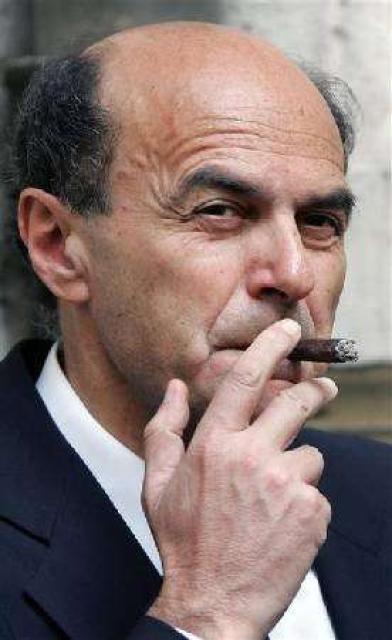
Pierluigi Bersani
 Italy
ItalyBiography of Pier Luigi Bersani
Pier Luigi Bersani was born in 1951 in Bettola, Province of Piacenza, Emilia-Romagna, Italy. He studied philosophy at the University of Bologna, where his thesis focused on the history of Christianity.
Political Career
Bersani's political career began in the ranks of the left-wing Democratic Party. In the mid-1990s, he was elected president of his native region, Emilia-Romagna, multiple times. He later served as a minister in Romano Prodi's cabinet, holding positions as Minister of Industry, Commerce, and Tourism, as well as Minister of Transport.

In 2001, Bersani entered the Italian national parliament as a deputy for the center-left Democratic list. In 2004, he was elected to the European Parliament, where he worked in delegations and committees for several countries that were formerly part of the Soviet Union, such as Kazakhstan, Kyrgyzstan, and Uzbekistan. He also served on the Economic and Monetary Affairs Committee.

After leaving the European Parliament in 2006, Bersani declined to run for the position of National Secretary of the Democratic Party during the party's elections. Walter Veltroni, the mayor of Rome, was elected to the position, and he was later succeeded by Dario Franceschini.
From 2006 to 2008, Pier Luigi Bersani served as the Minister of Economic Development. During his tenure, he introduced numerous bills and reforms aimed at protecting citizens' and consumers' interests, promoting entrepreneurship, streamlining bureaucratic procedures, and combating tax evasion. Many of Bersani's proposed reforms, including the so-called "Bersani Decree," sparked heated debates and even led to strikes and widespread opposition in Italy.
In October 2009, Bersani was elected as the leader of the Democratic Party in the party's elections. His victory was announced before the final results were tallied, as it became clear that he had secured over 50% of the votes. Italians, especially those who lean towards the left, saw Bersani's election as a chance for the Democratic Party to gain popularity and influence. As the de facto opposition party, the left-wing party had not had significant decision-making power in the ruling government.
According to Bersani himself, the victory would allow the Democrats to become "not only the opposition, but also an alternative" to the current center-right majority led by Silvio Berlusconi. This statement was made during his first press conference as the newly elected political leader. However, there were concerns that the party might revert to its old ways and adopt a social-democratic stance, which could lead to the departure of centrist Democrats and those who adhere to Christian democratic traditions.
Bersani, on the other hand, was confident that the party would not become "a party of one leader" but rather a center of interaction for a collective of leaders. His immediate priorities included addressing the issue of unemployment and consistently combating the rising levels of joblessness. Bersani also emphasized the need to expand cooperation with other opposition social and political organizations and forces.


