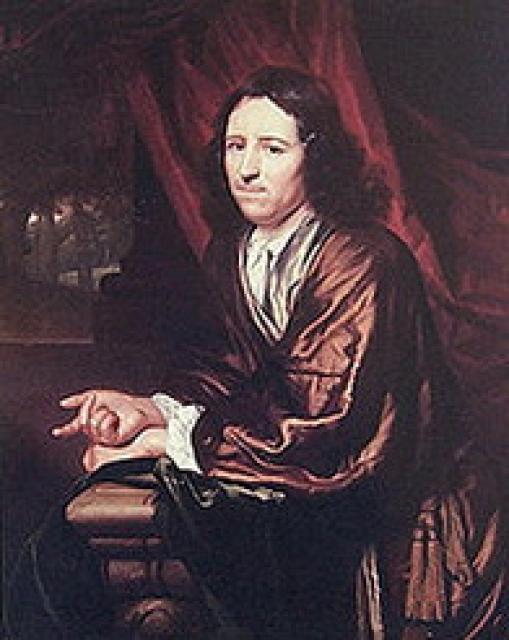
Pieter de la Court
 Netherlands
- Peter de la Court: A Pioneer of Economic Thought
- Early Work and Recognition
- Revised Edition and Economic Focus
- Free Trade and Economic Liberty
Peter de la Court: A Pioneer of Economic Thought
Peter de la Court, a Dutch economist, made significant contributions to economic theory and practice in the 17th century. However, his anonymity under the initials D. C., V. H., and V. D. H. (van den Hove) led to some of his works being misattributed.
Early Work and Recognition
De la Court's earliest known work, "Het welvaren der stadt Leiden" (1659), was published only partially in 1845. It was his "Interest van Holland of de Gronden van Hollands welvaren" (1662) that gained widespread attention. This influential work was notable for its analysis of the foundations of Holland's prosperity. While Chapters 29 and 30 were authored by Johan de Witt, the economic aspects of the book were largely attributed to de la Court.
Revised Edition and Economic Focus
An expanded version of "Interest van Holland" was published in 1669 under the title "Aanwijzing der heilsame politike Gronden en Maxime van de Republike van Holland en West-Vriesland." This revised edition emphasized economic principles and developed de la Court's ideas on free trade, guild reform, and manufacturing regulation.
Free Trade and Economic Liberty
De la Court was a strong advocate of free trade, particularly from a merchant's perspective. He opposed trade restrictions, such as guilds, monopolies, and manufacturing regulations, which he believed hindered the production of affordable goods. Economic historian Erwin Laspeyres hailed both Peter and his brother, Jan de la Court, as "the best defenders of economic liberty before Adam Smith."