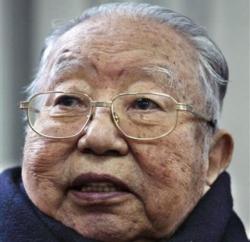
Prince Chun Zaifeng
 China
China- Early Life and Family
- Military and Political Service
- Regent to Emperor Puyi
- The Rise of Opposition and Revolution
- Fall from Power
- Later Years
- Death and Legacy
- Family and Children
Early Life and Family
Prince Chun, born as Zaifeng, was a member of the Aisin Gioro clan, the reigning family of the Qing dynasty. He was born in Beijing in 1883 to Prince Chunxian, the seventh son of Emperor Daoguang. His mother was Lady Lingjia, a Chinese concubine from the Liu family who later adopted a Manchu surname.
Prince Chun's older brother, Zaitian, was selected as the heir to the throne by Empress Dowager Cixi in 1875, elevating their branch of the imperial family to prominence. When Prince Chunxian died in 1891, Zaifeng inherited his father's title of "Great Prince Chun."
Military and Political Service
In 1901, during the Boxer Rebellion, the imperial court fled to Xi'an and appointed Zaifeng to command all military forces. In 1902, at the urging of foreign powers, he was sent to Europe as the Qing's special envoy to apologize for the assassination of German diplomat Clemens von Ketteler. He became one of the first members of the Manchu imperial family to travel abroad.
Regent to Emperor Puyi
In 1908, Emperor Guangxu died and Empress Dowager Cixi appointed Zaifeng as regent for his son, the three-year-old Puyi. Zaifeng's first act was to purge Yuan Shikai, who had betrayed Puyi's brother during the Hundred Days' Reform.
As regent, Zaifeng attempted to implement political and economic reforms, but his inexperience led to the weakening of central authority and the alienation of Manchu officials in the provinces. He also promised to convene a parliament in 1916 and held elections for provincial assemblies in 1909.
The Rise of Opposition and Revolution
In 1911, Zaifeng's appointment of an Imperial Cabinet dominated by Manchus angered constitutionalists. The nationalization of a railway project further inflamed tensions, leading to the Wuchang Uprising on October 10. The court was forced to recall Yuan Shikai to suppress the rebellion.
Fall from Power
As Yuan Shikai gained power, Zaifeng was stripped of his regency on December 6, 1911, and replaced by his half-sister, Empress Dowager Longyu. He retired from political life and focused on his family.
Later Years
After the fall of the Qing dynasty, Zaifeng retained his respect among the public. He recognized the Republic of China in 1912 and became the head of the imperial court in Beijing until Puyi's expulsion in 1924.
Zaifeng lived in seclusion until 1928, when he moved to Tianjin. He returned to Beijing in 1939 and declined to participate in the Japanese-backed Manchukuo state. Despite Puyi's pleas, he refused to live in Manchukuo, citing his health.
Death and Legacy
After the Communist victory in 1949, Zaifeng remained respected and donated his library and art collection to Peking University. He died in Beijing in 1951. Many of his descendants still reside in Beijing, some having adopted the Chinese surname "Jin" (meaning "gold"), the same meaning as Aisin Gioro.
Family and Children
Zaifeng's primary wife, Yu Lan, bore him five children:- Puyi (Pu Haozhang)
- Pu Jie (Pu Junzhi)
- Yunying
- Yunhe (Jin Xinzhu)
- Yubei (Jin Ruixiu)
His concubine, Deng Shi, bore him six children:
- Yunxian (Jin Yunxian)
- Puci
- Yunxin (Jin Ruiji)
- Pu Ren (Jin Yu Zhi)
- Yunyu (Pu Yunyu)
- Yunhuan (Jin Zhijian)