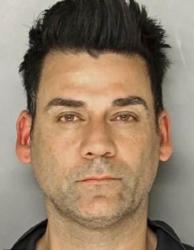
Raymond Rowe
 USA
Raymond Rowe, known professionally as DJ Freez, spent years building a career in Pennsylvania’s music and events scene before a cold-case investigation connected him to the 1992 killing of schoolteacher Christy Mirack. In 2019, he pleaded guilty to her murder and sexual assault and received a life sentence without parole.
Early life and music career
Born in the United States on January 1, 1969, Rowe grew up in Lancaster, Pennsylvania. He left high school in 1988, later earned a general equivalency diploma, and worked in cleaning and janitorial services. Alongside those jobs, he became involved in break dancing and local DJ competitions, eventually establishing himself as a professional disc jockey.
As DJ Freez, Rowe performed at clubs, weddings, school dances, and community events across central Pennsylvania. He hosted dance parties at Lancaster’s Chameleon Club and, for a period, operated a downtown shop selling music, clothing, and DJ equipment. His work brought him a public reputation as an energetic and personable entertainer, including at events for young people.
The Mirack case
On December 21, 1992, 25-year-old elementary school teacher Christy Mirack was found dead at her home in East Lampeter Township. The case remained unsolved for decades. Investigators later used genetic genealogy to identify relatives of the unknown suspect and focus on Rowe. In 2018, DNA taken from items he used at a school event matched evidence from the crime scene.
Rowe pleaded guilty in Lancaster County Court on January 8, 2019, to first-degree murder, rape, and related offenses. The court sentenced him to life in prison without the possibility of parole, followed by an additional 60 to 120 years. His conviction transformed the public story surrounding a local entertainer once known for his event work.
Later proceedings and public legacy
Rowe later sought additional DNA testing of evidence from the case. A Lancaster County judge denied the request in 2022, finding that he had not met the legal requirements for post-conviction testing; he remained in prison.
The case drew attention to the role of genetic genealogy in investigating long-unsolved crimes. For people who had known Rowe through his music business, the eventual conviction was difficult to reconcile with the friendly professional image he had cultivated. His story is now inseparable from the case that ended his career and brought a measure of resolution to a crime that had remained unsolved for 27 years.