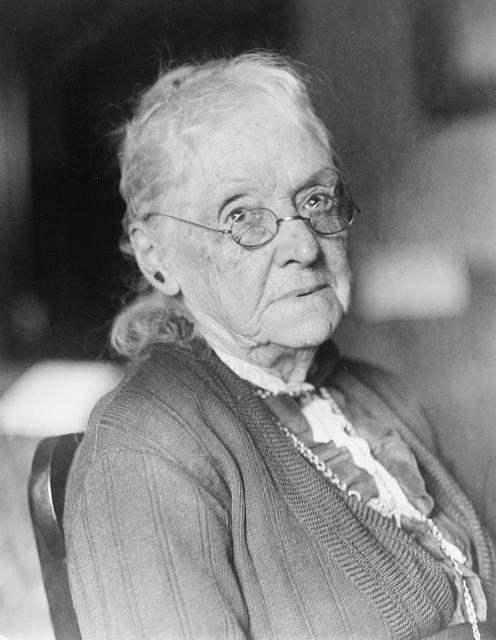
Rebecca Latimer Felton
 USA
USA- Early Life and Education
- Marriage and Family
- Post-Civil War Involvement
- Suffragism
- One Day as a Senator
- Later Years
- Racial Views
Early Life and Education
Rebecca Ann Latimer Felton was born on June 10, 1835, in Decatur, Georgia, to Charles Latimer, a wealthy planter, merchant, and department store owner, and Eleanor Swift Latimer. As the eldest of four children, Felton received her education at the Madison Female Methodist College, graduating at the age of 17 in 1852.
Marriage and Family
In 1853, Rebecca married William Harrell Felton and moved with him to the slaveholding community of Cartersville. The couple had five children, but only one, Howard Erwin Felton, survived infancy.
Post-Civil War Involvement
After the Civil War, Rebecca and her husband lost their slaves and established a school in Cartersville. In 1886, she joined the Women's Christian Temperance Union, where she developed her oratorical skills and advocated for equal rights for white women.
Suffragism
Felton formally joined the Women's Suffrage Movement in 1900 and became a prominent activist. Despite facing opposition, she continued to champion women's rights, arguing for their education, financial independence, and decision-making power within the family.
One Day as a Senator
In 1922, at the age of 87, Felton was appointed as a senator from Georgia by Governor Thomas William Hardwick to replace the deceased Thomas Watson. Her appointment was a symbolic gesture to recognize women's rights and a political move to secure female votes. Felton took the oath of office on November 21 and served for only one day, making her the first female senator in U.S. history.
Later Years
Following her brief tenure in the Senate, Felton returned to Cartersville, where she continued to write and teach. She passed away in Atlanta on January 24, 1930, and her remains were interred in the Oak Hill Cemetery in Cartersville.
Racial Views
Prior to the Civil War, Felton was a slave owner, and she remained the last former slave owner to serve in Congress. She believed in white supremacy and expressed racist views, advocating against education for African Americans and referring to young black men as "semi-civilized gorillas." Felton opposed voting rights for African Americans while supporting them for white women.