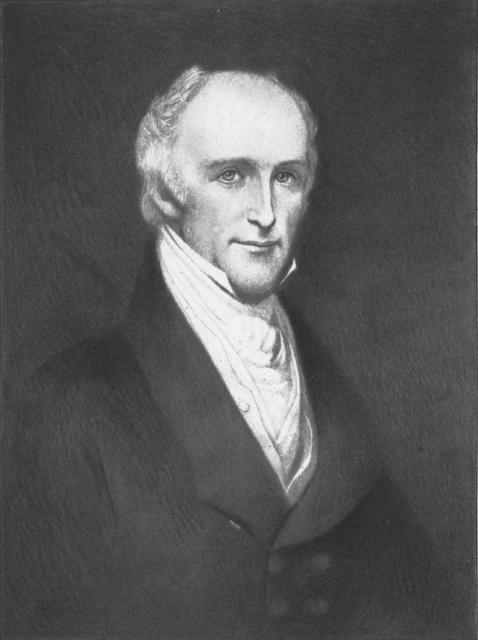
Richard Rush
 USA
USA- Biography of Richard Rush
- Early Life and Education
- Career as a Lawyer and Public Official
- Minister to Great Britain and Later Career
- Later Years and Legacy
Biography of Richard Rush
Richard Rush, an American political and public figure, served as the United States Attorney General under President James Madison and as the Secretary of the Treasury under President John Adams. He was born on August 29, 1780, in Philadelphia, Pennsylvania, to Benjamin Rush, a prominent physician and signatory of the Declaration of Independence, and Julia Stockton.
Early Life and Education
At the age of 14, Rush enrolled at the College of New Jersey and graduated in 1797, becoming the youngest graduate in his class. He was admitted to the bar in 1800 at the age of 20 and studied law under William Draper Lewis. On August 29, 1809, he married Catherine Eliza Murray, and they had ten children, but only three sons and two daughters survived.
Career as a Lawyer and Public Official
After obtaining his license to practice law, Richard Rush quickly gained national attention as an orator and successful trial lawyer. In 1811, he was appointed the Attorney General of Pennsylvania, declining a congressional bid shortly before. In November 1811, President Madison appointed Rush as the Secretary of the Treasury. As one of Madison's close friends, Rush served as a confidential advisor to the president during the War of 1812. He held the position of United States Attorney General from 1814 to 1817, during which time he worked on the codification of U.S. laws. Rush also served as acting Secretary of State until the return of John Adams from Europe and played a significant role in the Rush-Bagot Convention, which demilitarized the American-Canadian border on the Great Lakes.
Minister to Great Britain and Later Career
In October 1817, Rush became the Minister to Great Britain, and his diplomatic skills were highly regarded by the British, as evidenced by his nearly seven-year tenure. He played a key role in important negotiations, including the signing of the Anglo-American Convention in 1818. Rush also led unsuccessful negotiations with Britain in 1823, which led to the creation of the Monroe Doctrine. When John Quincy Adams became President of the United States in 1825, Rush desired to be the Secretary of the Navy but was appointed as the 8th Secretary of the Treasury instead. He served in this position from March 7, 1825, to March 5, 1829, successfully reducing the national debt and leaving a surplus for his successor.
Later Years and Legacy
In 1828, Rush ran as a candidate for Vice President but was unsuccessful. After leaving the Treasury Department, he was sent to England and the Netherlands to negotiate large loans for the cities of Georgetown and Alexandria. His mission was successful. In 1836, Rush traveled to England as a commissioner to retrieve the bequest left by James Smithson for the United States government. He successfully fulfilled the task, and the sum of $508,318.46 was used to establish the Smithsonian Institution in Washington, D.C. Later, Rush became one of the first members of the board of regents for this university.
In 1847, Rush was appointed as the Minister to France under President James K. Polk. He was one of the first diplomats to recognize the Second French Republic after the overthrow of King Louis-Philippe. He served in this role until 1849 when he was recalled by the new administration. Rush resigned and returned to Philadelphia, where he passed away on July 30, 1859.