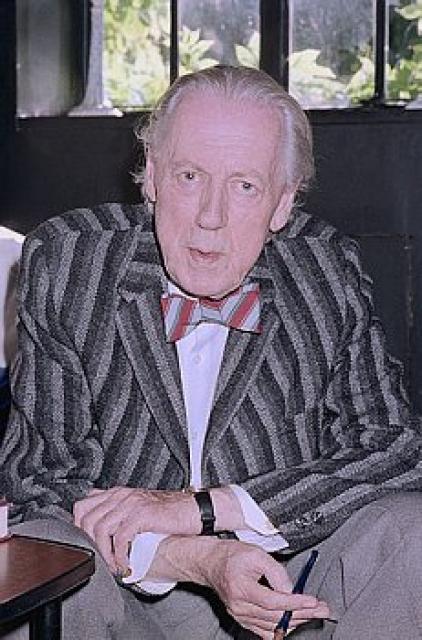
Richard Stone
 Great Britain
Richard Stone - Nobel laureate in economics
Richard Stone was a British economist and the recipient of the Nobel Prize in Economic Sciences. In 1984, he was awarded the prize for developing an accounting model that is used to track economic activity at both the national and international level. Although Stone was not the only economist to contribute to this field, he was the first to create double-entry national accounting systems, which ensure overall balance. Today, double-entry bookkeeping is applicable to almost all modern calculations, allowing for the tracking of global trade and financial transfers. Stone is sometimes referred to as the "father of national income accounting". He conducted research on consumer demand statistics, demand modeling, economic growth, and input-output analysis. During his Nobel Prize acceptance speech, Stone mentioned the renowned economist François Quesnay and his work "Tableau économique", stating that it was one of the first works in economics to study the interconnection of various sectors on a global scale.
Biography of Richard Stone
Sir John Richard Nicholas Stone was born on August 30, 1913, in London, England. After graduating from Cambridge in 1936, Stone worked at Lloyd's Brokers brokerage firm before the outbreak of World War II. When the war began, he transitioned to working as a statistician and economist for the British government alongside James Meade. It was during this time that Meade and Stone developed their initial versions of national accounting systems.
After the war, Richard joined Cambridge as the director of the new Faculty of Applied Economics (1945-1955) and as the P.D. Leake Professor of Finance and Accounting. At the faculty, Stone initiated the extensive economic project called the "Cambridge Growth Project", which developed the "Cambridge Multisectoral Model of the British Economy" (MDM). Terry Barker succeeded him as the head of the project.
In 1978, members of the faculty founded the company "Cambridge Econometrics", with Stone serving as its honorary director. The company continued working with MDM and utilized the model for economic forecasting. In 1936, Stone married Winifred Mary Jenkins, who also had ties to Cambridge. Both passionate about economics, they decided to publish a monthly magazine called "Trends", which became a supplement to the periodical "Industry Illustrated". The magazine featured articles about economic conditions in Britain. Shortly after, in 1939, Stone accepted an offer to join the Ministry of Economic Warfare.
In 1960, Stone married Giovanna Saffi, the great-granddaughter of Italian revolutionary democrat Aurelio Saffi, who contributed to many of Stone's later works. In addition to his economic writings, Stone authored works such as "The Analysis of Market Demand" and "Mathematical Models in Economy and other Essays".


