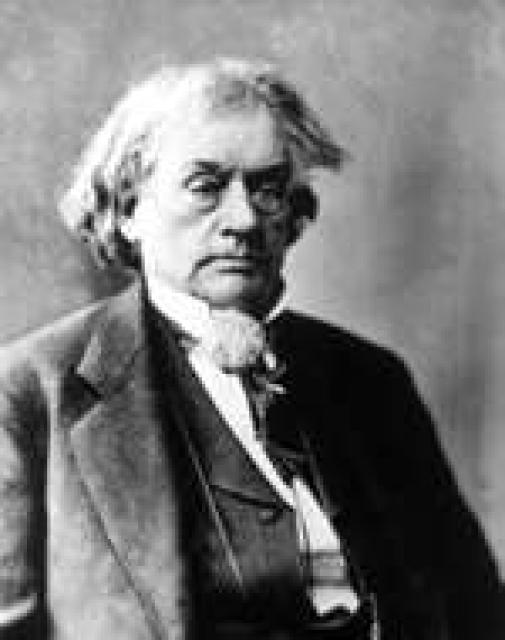
Robert Augustus Toombs
 USA
USABiography of Robert Augustus Toombs
Robert Augustus Toombs was a prominent figure in American history, serving as both a State Secretary and a Confederate Army General. Born in 1810 in Wilkes County, Georgia, Toombs began his education at Franklin College of the University of Georgia. However, he was expelled for "improper conduct while playing cards" at the young age of fourteen. Undeterred, Toombs continued his education at Union College in New York and the Law School of the University of Virginia.
Political Career
Toombs began his career as a lawyer in 1830 in Georgia and soon became involved in state politics. He was elected to the legislature three times and in 1844, with the support of the Whig party, he won a seat in the United States House of Representatives. In Congress, he worked closely with his longtime friend Alexander Stephens, developing a unified position for Georgia representatives on pressing issues of the mid-nineteenth century. Like Stephens, Toombs fiercely defended states' rights.
In 1853, Toombs became a member of the Senate. By this time, the Whig party had dissolved, and the Constitutional Union Party had emerged, eventually merging into the Democratic Party. Initially, Toombs advocated for the preservation of the Union, criticizing any actions that could undermine the delicate balance between the North and the South. He opposed the Mexican-American War, the annexation of Texas and Oregon, and supported the Compromise of 1850. However, while he believed secession was not unconstitutional, he did not see it as necessary.
During the "Bleeding Kansas" period, Toombs supported the Lecompton Constitution but became disillusioned with the federal government's ability to resolve sectional conflicts. By 1860, Toombs had aligned himself with the opposition to Northern abolitionists. In the 1860 elections, he supported John C. Breckinridge. After Abraham Lincoln's victory, Toombs resigned from the Senate and returned to his home state of Georgia, where he joined Governor Joseph Brown in the movement for Georgia's secession.
Confederate Service
Playing a role in the creation of the Confederacy, Toombs hoped to secure a high-ranking position in the new government, secretly harboring presidential aspirations. When someone else was chosen for the position, Toombs found himself in opposition to the Confederate government. Despite his critical stance, President Jefferson Davis offered Toombs the position of Secretary of State. However, their relationship quickly soured, and Toombs resigned in July 1861, joining the Confederate Army as a brigadier general.
During his military service, Toombs fought in the Seven Days Battles and the Battle of Antietam. At the Battle of Antietam, he commanded the defense of a bridge against the advancing Union forces and was wounded in the hand. In March 1863, Toombs resigned from the army and joined the Georgia militia.
Later Years and Legacy
After the collapse of the Confederacy, Toombs escaped to Europe through Cuba. He returned home in 1867 and, despite never seeking a pardon from Congress, he remained an "unreconstructed southerner" until his death in 1885, with his US citizenship never restored. Robert Augustus Toombs left a lasting mark on American history as a fierce defender of states' rights and a key figure in the Confederate government and military.


