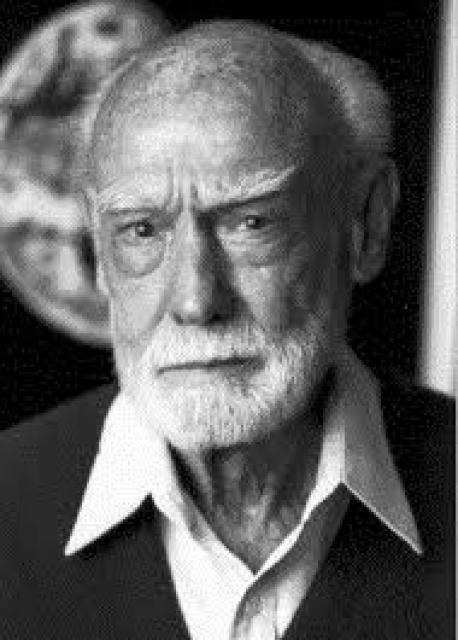
Roger Wolcott Sperry
 USA
- From literature to neuroscience
- How nerves find their way
- The split-brain studies
- Recognition and legacy
Roger Wolcott Sperry changed how scientists think about the brain’s two hemispheres. His split-brain research showed that the left and right sides can specialize in different tasks and, when their connecting fibers are severed, can process information with surprising independence. That work grew out of a much broader career in neurobiology, including influential research on how nerve cells form precise connections.
From literature to neuroscience
Sperry was born in Hartford, Connecticut, on 20 August 1913, and grew up nearby. At Oberlin College in Ohio, he initially studied English literature and competed in athletics. Psychology courses redirected his interests: after earning his bachelor’s degree, he completed a master’s in psychology in 1937.
He moved to the University of Chicago for doctoral work in zoology, studying with Paul Weiss. Sperry earned his PhD in 1941, then undertook postdoctoral research at Harvard with psychologist Karl Lashley. He continued at the Yerkes Laboratories of Primate Biology in Florida, returned to Chicago in 1946 as a faculty member, and later worked with the National Institute of Neurological Diseases and Blindness.
How nerves find their way
In early experiments, Sperry studied what happened when nerves were cut and later regenerated. He found that, in some animals, fibers returned to specific targets rather than reconnecting at random. He proposed that nerve cells carried chemical cues that guided them to appropriate partners, a view often called the chemoaffinity hypothesis. It challenged theories that neural connections were shaped chiefly by general electrical activity or use, and helped establish a foundation for modern ideas about brain development.
In 1954, Sperry joined the California Institute of Technology as Hixon Professor of Psychobiology. At Caltech, he began a series of studies on the corpus callosum, the large bundle of fibers linking the brain’s hemispheres. His team first investigated animals whose callosum and other connections had been severed. The experiments made it possible to test each hemisphere separately and ask how much perception, learning and memory depended on communication across the brain.
The split-brain studies
The work later extended to people who had undergone surgery to sever the corpus callosum as a last resort to control severe epilepsy. Working with neurosurgeons Joseph Bogen and Philip Vogel, Sperry and his colleagues devised tests that presented information to one side of the brain at a time. Researcher Michael Gazzaniga was among the first to work directly with the human patients.
The results revealed an unexpected asymmetry. In most people, language and naming were more strongly associated with the left hemisphere, while the right could perform visual and spatial tasks that it could not readily describe in words. When the bridge between the hemispheres was cut, information delivered to one side could be inaccessible to the other. Sperry’s findings showed that the two halves had distinct capacities and could act with considerable independence.
Popular accounts sometimes reduce the discovery to a simple opposition between a logical left brain and a creative right brain. Sperry’s research was more precise: different tasks showed different patterns of specialization, and neither hemisphere was a complete personality type. The experiments instead reshaped scientific debates about consciousness, perception and the organization of thought.
Recognition and legacy
Sperry received the 1981 Nobel Prize in Physiology or Medicine for discoveries concerning the functional specialization of the cerebral hemispheres. The prize was shared: Sperry received one half, while David Hubel and Torsten Wiesel jointly received the other half for their discoveries about information processing in the visual system. Sperry also received the Wolf Prize in Medicine and the United States National Medal of Science.
He remained at Caltech for decades, becoming professor emeritus in 1984. He died in Pasadena, California, on 17 April 1994. His work reached beyond the study of split-brain patients: by showing how specific connections and specialized processing shape behavior, Sperry helped make the brain’s organization a central question in modern neuroscience.


