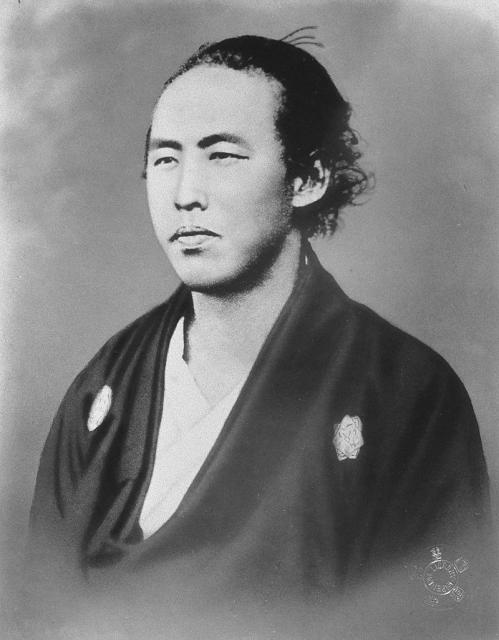
Sakamoto Ryoma
 Japan
Japan- Sakamoto Ryōma: A Pivotal Figure in Japan's Meiji Restoration
- Early Life and Education
- Political Involvement and Departure from Tosa
- Edo and the Influence of Katsu Kaishu
- Foundation of the Navy Training Center in Kobe
- Alliance of Satsuma and Chōshū
- Assassination Attempt and Marriage
- "Eight Ship Points" and Abolition of the Shogunate
- Later Years and Assassination
- Legacy and Impact
Sakamoto Ryōma: A Pivotal Figure in Japan's Meiji Restoration
Sakamoto Ryōma (1836-1867) was a prominent Japanese politician and social activist during the late Edo period. Known by the pseudonym Saidanji Umetarō, he played a pivotal role in the movement to overthrow the Tokugawa shogunate and establish a modern, unified Japan.
Early Life and Education
Born on January 3, 1836, in Tosa Province, Sakamoto hailed from a wealthy merchant family. Despite his initial struggles in academics, he excelled in swordsmanship at the age of 15. In 1853, he traveled to Edo (present-day Tokyo) to further hone his skills in the "Polar Star Sword" style under Chiba Sadakichi.
Political Involvement and Departure from Tosa
In 1861, Sakamoto joined the Tosa Loyalist Party, which advocated for the restoration of imperial rule. Inspired by Kusaka Genzui, he left Tosa without permission and traveled to Hagi, where he met with his future comrade, Kido Takayoshi.
Edo and the Influence of Katsu Kaishu
Upon his arrival in Edo, Sakamoto encountered Katsu Kaishu, a high-ranking shogunate official responsible for naval reforms. Impressed by Katsu's knowledge of modern seafaring, Sakamoto became his disciple and abandoned his previous xenophobic views.
Foundation of the Navy Training Center in Kobe
In 1863, Sakamoto played a key role in establishing a navy training center in Kobe with Katsu's support. However, the sudden resignation of Katsu forced the closure of the center and Sakamoto's dismissal.
Alliance of Satsuma and Chōshū
After meeting with influential figures such as Saigō Takamori and Ōkubo Toshimichi, Sakamoto gained the patronage of the Satsuma domain. In 1865, he founded the Kameyama Company in Nagasaki to facilitate trade with foreign nations. Through this enterprise, he facilitated a secret alliance between Satsuma and Chōshū on March 7, 1866, to overthrow the shogunate.
Assassination Attempt and Marriage
In 1866, Sakamoto was nearly assassinated by Tokugawa forces but was saved by the quick thinking of Narasaki Ryō, the adopted daughter of the merchant whose house he was hiding in. He subsequently married Narasaki and became a central figure in the alliance between Satsuma and Chōshū.
"Eight Ship Points" and Abolition of the Shogunate
In 1867, Sakamoto formulated his "Eight Ship Points" outlining his vision for a modernized and unified Japan. These points influenced Tosa's decision to urge Tokugawa Yoshinobu to surrender his authority to the emperor. On November 9, 1867, the shogunate was officially abolished.
Later Years and Assassination
As the Meiji Restoration unfolded, Sakamoto served as an envoy for the Tosa domain and continued to advocate for his political ideals. However, his life was cut short on December 10, 1867, when he was assassinated by shogunate forces in Kyoto.
Legacy and Impact
Despite the brevity of his life, Sakamoto Ryōma's impact on Japanese history was profound. His role in the abolition of the shogunate and the establishment of a modern, centralized government earned him recognition as a national hero. His legacy continues to inspire generations of Japanese, and his name remains synonymous with the struggle for change and progress in Japan.