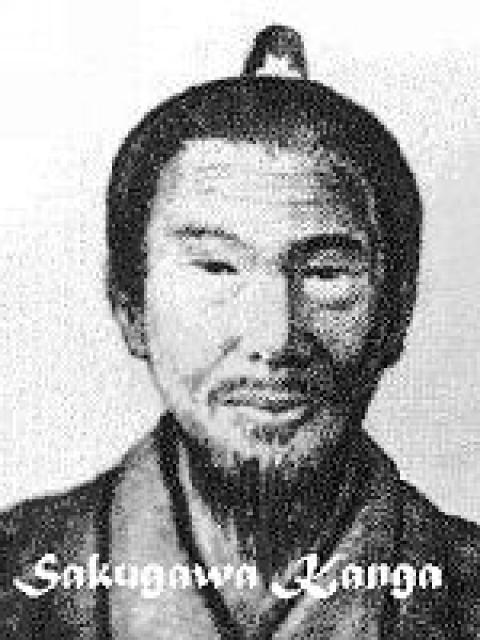
Sakugawa
 Japan
Japan- Sakagawa "Tode" (1733-1815): The Father of Karate
- Influence of the White Crane School
- Journeys to China and Legacy
- Kata and Contributions
Sakagawa "Tode" (1733-1815): The Father of Karate
Early Life and TrainingMaster Sakagawa "Tode" was born in 1733 on the island of Okinawa. He began studying martial arts under the tutelage of Peichin Takahara in Akatta, Okinawa, at the age of seven. At the age of 17, he encountered Master Kusanku, a renowned master of Chinese Quan Shu, who taught Kempo on Okinawa. Kusanku taught Sakagawa the Kan Ku kata, which became a staple in various karate schools.
Influence of the White Crane School
Kusanku belonged to the White Crane family of martial arts, which had a significant impact on the development of karate. The White Crane emphasizes the combination of relaxation with explosive energy release, a principle known as "trembling effort" in Chinese Kempo. This concept was creatively adapted by Okinawan masters and became the foundation of many basic karate techniques.
Journeys to China and Legacy
Sakagawa repeatedly traveled to China to further his study of Quan Shu. Upon his final return to Okinawa, he introduced the character "kara" (meaning "empty" in Chinese) to the name of his Tode school, which became known as "Karate-no Sakagawa." He trained numerous skilled martial artists, including Chokun Makabe and Peichin Okuda, who laid the foundation for Tomari-te, a branch of Okinawan karate. However, Sakagawa's most famous student was Sokon "Bushi" Matsumura (1797-1889), who established the mainstream branch of Okinawan karate known as Shorin-ryu.
Kata and Contributions
Sakagawa created several kata, including Sakagawa no Kun Kata and Bo-jutsu Kata. He is also credited with establishing the dojo etiquette that is still observed in karate today.