Samia SuluhuSuluhu
 Tanzania
- From Zanzibar public service to national politics
- A historic presidency
- Second term and contested election
- A pioneering but debated leader
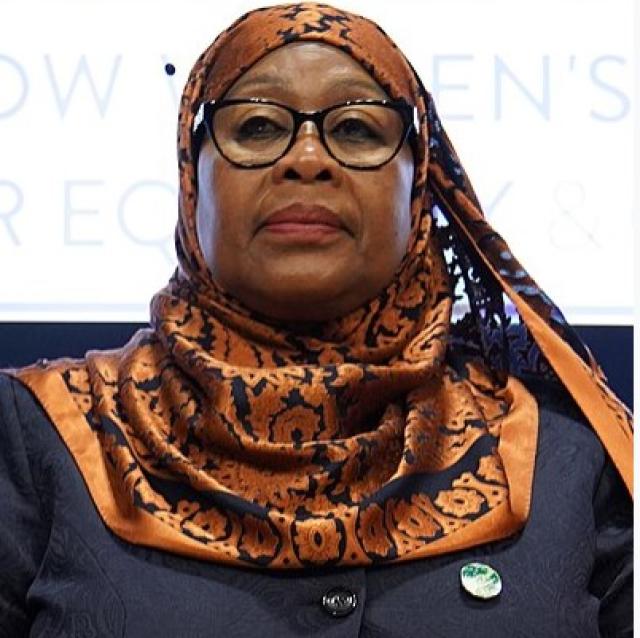
Samia Suluhu Hassan is a Tanzanian politician who became the country’s first woman president in 2021. Her rise from Zanzibar’s public service to the Union’s highest office reflects decades of work in government, party politics and development programs. Her leadership has also become closely tied to debates over political openness and the integrity of Tanzania’s elections.
From Zanzibar public service to national politics
Born in Zanzibar on 27 January 1960, Hassan studied statistics and public administration before beginning her career in government. She later worked on a World Food Programme project and earned further qualifications in economics and community economic development.
Hassan joined the ruling Chama Cha Mapinduzi (CCM) party in 1987 and entered elected politics in 2000, when she won a special-seat position in Zanzibar’s House of Representatives. She served in the Zanzibar government as a minister for labour, youth, women and children, then held the tourism, trade and investment portfolio. In 2010 she won a seat representing Makunduchi in the Union Parliament and became a minister responsible for Union affairs. She also served as vice-chair of the Constituent Assembly in 2014.
A historic presidency
In 2015, Hassan became Tanzania’s first female vice-president, serving alongside President John Magufuli. When he died in March 2021, she was sworn in as the sixth president under the constitution’s succession process, making her the first woman to lead the country.
Her assumption of office initially brought a shift in political atmosphere. Political rallies that had been restricted under Magufuli were permitted again, some politicians returned from exile and media outlets regained licenses. Hassan’s administration also promoted economic diplomacy and investment, while facing continuing pressure over political freedoms and accountability.
Second term and contested election
Hassan won a second term in the October 2025 election and was sworn in on 3 November. The vote was highly contentious: leading opposition candidates were barred from contesting, protests turned deadly, and the African Union’s observer mission said the diminished competition and restrictions on participation fell short of democratic principles. Human Rights Watch later reported that hundreds of protesters and bystanders were killed by police and people in plain clothes during the unrest. The government established a commission of inquiry, but its handling of accountability remains disputed.
A pioneering but debated leader
Hassan’s public image combines a historic breakthrough in women’s political representation with the challenges of governing a country whose political space remains contested. Her career has spanned local administration, Zanzibar politics, national cabinet posts and the presidency. As Tanzania’s first female head of state and a leader who has now begun a second term, her legacy is still being shaped by both the political opening of her early presidency and the serious concerns surrounding the 2025 election.