Sergey Paradjanov
 Georgia
- Early Life and Artistic Influences
- Artistic Journey: From Engineering to Filmmaking
- Cinematic Breakthroughs: Moldavian and Ukrainian Themes
- "Shadows of Forgotten Ancestors": A Cinematic Masterpiece
- "The Color of Pomegranates": An Artistic Odyssey
- Dissent and Imprisonment
- Release and Continued Artistic Expression
- Legacy: A Cinematic Innovator
Early Life and Artistic Influences
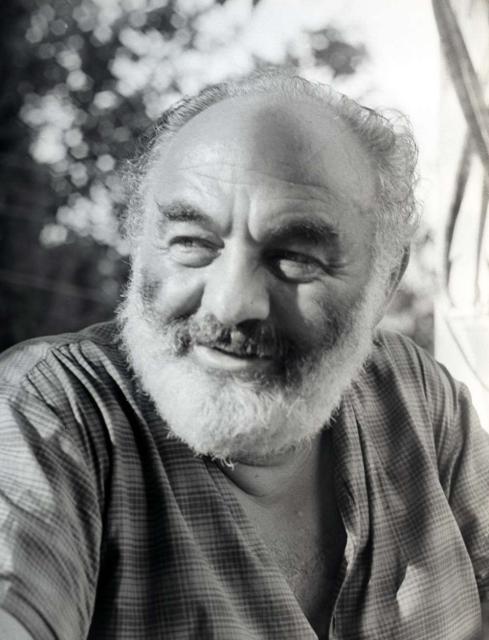
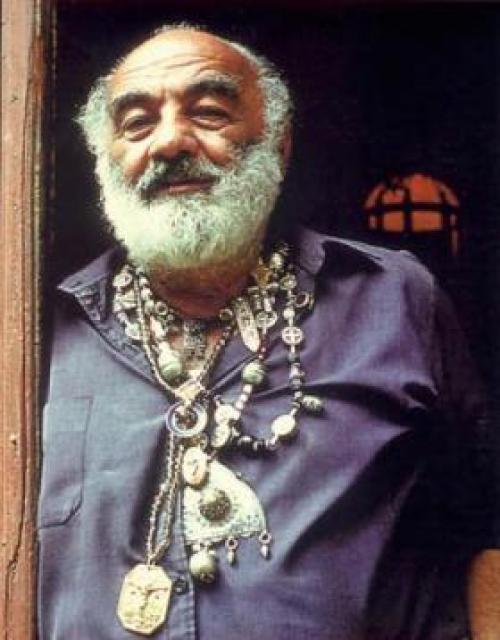
Sergei Parajanov, a visionary Soviet filmmaker and screenwriter, emerged from the bustling city of Tbilisi, Georgia, on January 9, 1924. Born into an Armenian family, Parajanov's upbringing was shaped by his father's lucrative antique business and the influence of his artistic parents. Despite his family's expectations for him to follow in his father's footsteps, Parajanov's passion for art led him on a different path.
Artistic Journey: From Engineering to Filmmaking
After briefly pursuing engineering at the Tbilisi Institute, Parajanov embraced his artistic aspirations. He studied at the Tbilisi Conservatory and later, in 1945, relocated to Moscow to pursue his dream of becoming a filmmaker. He enrolled at the Gerasimov Institute of Cinematography (VGIK), where his artistic sensibilities began to flourish.

During his time at VGIK, Parajanov became captivated by the beauty of Moldova and its people. His love for his Moldovan wife, Nigyar, tragically ended with her untimely and brutal death. The incident left a profound impact on Parajanov's psyche and later influenced his artistic expressions.

Cinematic Breakthroughs: Moldavian and Ukrainian Themes
In 1952, Parajanov graduated from VGIK with his directorial debut, "Moldavian Fairy Tale." His first major film, "Andriesh" (1954), showcased his unique storytelling abilities and launched his career at the Dovzhenko Film Studio. In 1955, he married a Ukrainian woman, Svetlana Shcherbatyuk, with whom he had a son named Suren.

"Shadows of Forgotten Ancestors": A Cinematic Masterpiece
In 1964, Parajanov's cinematic masterpiece, "Shadows of Forgotten Ancestors," brought him international acclaim. This groundbreaking film, based on a work by Mykhailo Kotsiubynsky, celebrated the Hutsul culture of Western Ukraine. Its innovative use of color, camera movement, and musicality drew rave reviews and won awards at film festivals in Italy and Argentina.

"The Color of Pomegranates": An Artistic Odyssey
In 1967, Parajanov was invited to the Yerevan Film Studio, where he created his most experimental and poetic work, "The Color of Pomegranates" (1968). This film about the great Armenian poet Sayat-Nova became a testament to Parajanov's unique artistic vision. Its sparse color palette, symbolic imagery, and intricate editing have made it a timeless masterpiece.
Dissent and Imprisonment
Parajanov's rebellious nature and outspoken criticism of the Soviet system often brought him into conflict with the authorities. In 1973, he was falsely accused of homosexuality and sentenced to five years in prison. The charges, based on a satirical remark Parajanov had made in a Belgian newspaper, were a pretext for silencing his dissent.
Release and Continued Artistic Expression
Parajanov's release in 1977 was a testament to the international outcry against his imprisonment. He settled in Tbilisi and resumed his work at the Georgia Film Studio. His later films, "Legend of the Suram Fortress" (1984) and "Ashik-Kerib" (1988), exhibited an even more refined and nuanced cinematic language.
Legacy: A Cinematic Innovator
The question of Parajanov's sexual orientation remains a subject of debate. Regardless, he freely expressed his fondness for the male form and enjoyed provoking the public with his flamboyant eccentricities. Parajanov's undeniable talent and unwavering artistic spirit made him a legend in the annals of cinema.
His untimely demise on July 21, 1990, left a void in the world of art. Parajanov was laid to rest in the hallowed grounds of the Komitas Pantheon in Yerevan, Armenia, where his legacy as a visionary filmmaker and a profound influence on multiple cultures continues to inspire generations.