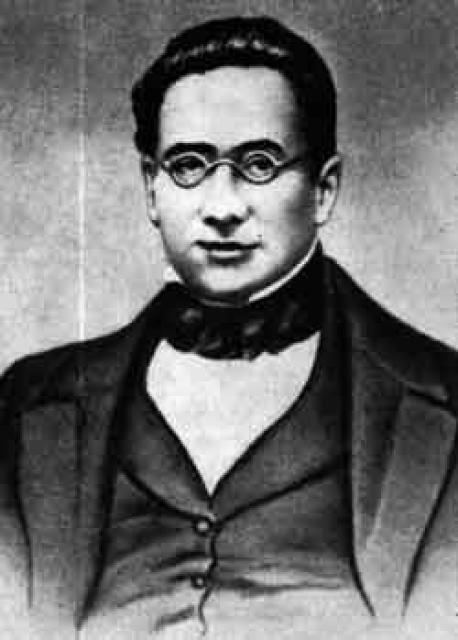
Siegfried Wilhelm Dehn
 Germany
- Early Life and Education
- Musical Pursuits
- Curator of the Prussian Royal Library
- Academic and Editorial Work
- Legacy as a Pedagogue
Early Life and Education
Siegfried Dehn was born on February 24, 1799, in Altona, Hamburg. The son of a banker, he grew up in an affluent family and received early cello lessons. Initially aspiring to a career in diplomacy, Dehn studied law in Leipzig while taking music lessons from organist Johann Andreas Dröbs.

Musical Pursuits
After an appointment to the Swedish embassy in Berlin, Dehn continued to pursue his musical interests, studying with the young composer Bernhard Klein. In 1830, when his family's bank collapsed, Dehn lost his financial security and turned solely to music. He soon established himself as a respected music theorist and педагоgue.
Curator of the Prussian Royal Library
In 1842, Giacomo Meyerbeer recommended Dehn for the position of curator of the music department of the Prussian Royal Library. Dehn diligently cataloged and expanded the library's collections, incorporating materials from other Prussian libraries. Among his acquisitions were the archives of Anton Schindler, Beethoven's biographer, and the music library of Georg Pölchau, which included valuable manuscripts by Bach.
Academic and Editorial Work
From 1842 to 1848, Dehn edited the musical journal "Cäcilia." In 1849, he became a professor at the Royal Academy of the Arts. He also succeeded Friedrich Conrad Griepenkerl as editor of the complete organ works and other publications of Johann Sebastian Bach for the Peers Edition. Dehn is credited with preparing the first edition of the Brandenburg Concertos and editing numerous church songs by Orlande de Lassus.
Legacy as a Pedagogue
Siegfried Dehn gained renown as an exceptional pedagogue. His pupils included Albert Becker, Carl August Peter Cornelius, Heinrich Hofmann, Mikhail Glinka, and Anton Rubinstein. Dehn passed away on April 12, 1858, leaving behind a legacy of musical scholarship and pedagogy.




