Simon Wiesenthal
 Austria
Biography of Simon Wiesenthal
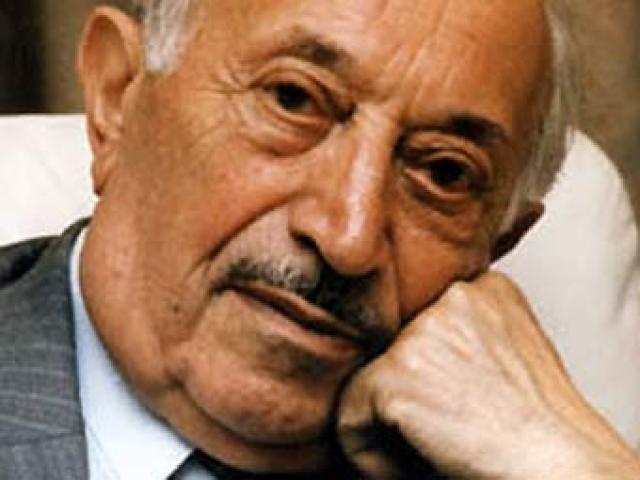
Simon Wiesenthal, a man who dedicated his life to hunting down war criminals, passed away in Vienna at the age of 97. He was known around the world as the "Nazi hunter" and lived by the motto "Never forget and never forgive." Wiesenthal, a former concentration camp prisoner, spent his final days exposing Nazi criminals who were hiding from justice. Thanks to his efforts, over a thousand SS officers, including Adolf Eichmann, the architect of the "Final Solution," and Franz Stangl, the commandant of the Treblinka extermination camp, were arrested and convicted. Wiesenthal did not listen to those who urged him to "let the past rest" - he searched and he found.
Early Life
Simon Wiesenthal was born on December 31, 1908, in Buchach, in the territory of Austro-Hungary. In 1928, he graduated from high school and applied to the Lviv Polytechnic University. However, he was denied admission due to a quota on Jewish students. Wiesenthal then enrolled at the Prague Technical University and graduated in 1932 with a degree in architecture. In 1936, he got married and returned to Lviv, where he opened an architectural bureau. Before suffering under the Nazis, the Wiesenthal family also suffered under the Soviets. When Lviv was occupied by Soviet forces after the Molotov-Ribbentrop Pact, Wiesenthal's stepfather and brother were arrested. When the city was occupied by the Nazis, Simon Wiesenthal and his wife Cyla ended up in the Janowska concentration camp, located near the city. In 1942, with the help of the Polish Underground, Cyla managed to escape and successfully hide from the Nazis until the end of the war. Simon Wiesenthal himself escaped in 1943 but was captured eight months later and thrown back into a concentration camp. He was later transferred to other camps. The end of the war found him in the Mauthausen camp in Austria - on May 5, 1945, an American tank unit entered the camp and liberated the prisoners. At the time of his liberation, Wiesenthal was in a barrack for the dying and weighed just over 40 kilograms. American military doctors were able to save him, and at the end of 1945, he found his wife Cyla.
Nazi Hunting
Wiesenthal wasted no time and immediately began gathering evidence of Nazi crimes, working closely with the U.S. Army's War Crimes Commission. He also worked for the Office of Strategic Services (the predecessor to the CIA) and the Counterintelligence Corps of the U.S. Armed Forces, providing them with information on Nazi criminals in Austria. The evidence collected by Wiesenthal was used in the trials of Nazis conducted in the American occupation zone. When his cooperation with the military government ended in 1947, Wiesenthal, along with a group of like-minded individuals, opened the "Jewish Documentation Center" in Linz, Austria. The goal of this continuously expanding archive was to collect documentary evidence of Nazi atrocities and prepare for future trials. It should be noted that from the late 1940s, the desire to bring German war criminals to justice began to gradually diminish, both from official Moscow and Washington. In fact, the search for Nazis was actively pursued only in the early post-war period, and then the Cold War began, and former allies had other priorities than catching fleeing SS officers. However, this did not concern Wiesenthal - he had his own goal: to make sure that there was no escape for the Nazis. In 1954, the center in Linz was closed, and Wiesenthal handed over all his archives to Israel, keeping only the dossier on Adolf Eichmann. Capturing Eichmann was Wiesenthal's main objective. It was Eichmann, the Obersturmbannführer of the SS, who was responsible for the extermination of millions of Jews during World War II.
The Capture of Eichmann
In 1942, Eichmann presented a plan to the senior Nazi leadership called the "Final Solution to the Jewish Question" - a plan for the systematic extermination of Jews on an industrial scale. The SS department "IV-B-4" under Eichmann's leadership was responsible for the creation of Jewish ghettos in occupied cities, as well as death camps. Eichmann had almost unlimited powers and immense authority - he personally controlled every detail, from the height of the bunks in prisoner barracks to the number of trains needed to transport Jews to the death camps. In the spring of 1945, Eichmann attempted to escape. He was arrested multiple times by the Americans but managed to flee. Until 1950, he lived in Germany under a false identity, and later, with the help of an underground organization of ex-Nazis, he moved to South America.
In the early 1950s, Wiesenthal received information that Adolf Eichmann was hiding in Argentina and immediately informed the Israeli government. The hunt for the chief executioner of Jews by Israeli intelligence agencies lasted several years and ended with Mossad agents kidnapping Eichmann from Buenos Aires and secretly bringing him to Israel, where he was put on trial and executed. After capturing Eichmann, Wiesenthal reopened his documentation center, this time in Vienna, and began creating a massive archive on Nazi war criminals. It can be said that from this moment on, Wiesenthal's personal hunt for former SS officers began. Wiesenthal managed to uncover over 1,100 Nazi criminals and provide the collected evidence to the courts. Among these individuals were Franz Stangl, the commandant of the Treblinka and Sobibor death camps, where 750,000 people were poisoned, shot, or tortured to death; Helene Bruns, the killer of children in the Majdanek concentration camp; Karl Silberbauer, the Gestapo officer who arrested 14-year-old Anne Frank and her family in Amsterdam; and Klaus Barbie, the head of the Lyon Gestapo.
Criticism and Legacy
The "progressive forces of the world," represented by the USSR, had a mixed attitude towards Wiesenthal's activities. On the one hand, official Moscow welcomed the search for war criminals. But on the other hand, unofficially, the Soviet leadership frowned upon Wiesenthal due to his sometimes inaccurate investigations. For example, Wiesenthal had evidence that many former Nazis had found refuge in the East German secret service, the Stasi. According to him, this explained why the Stasi became so highly professional - they hired experienced personnel. The authorities in East Germany knew about this situation but turned a blind eye to it because they needed these "specialists." The Soviet KGB, which had often used the Stasi for its own operations, found this situation agreeable. However, Wiesenthal found it unacceptable. Wiesenthal's independence and non-compliance often irritated officials from various countries' government structures and made his cooperation with these structures difficult. But Wiesenthal never cared about "higher" considerations of political expediency. His activities were often criticized, sometimes harshly. He was accused of distorting the number of Holocaust victims and of taking liberties with historical truth. Some claimed that many of the facts he collected were fabrications and that for him, the end always justified the means. Tuvia Friedman, a former colleague of Wiesenthal's, accused the "Nazi hunter" of mainly engaging in self-promotion. In 1991, Isser Harel, an Israeli officer who had participated in the capture of Eichmann, stated that Wiesenthal was "not at all involved" in the capture and that his role in apprehending the Nazi criminal had been greatly exaggerated.
Critics often claimed that Wiesenthal's search for fugitive criminals was driven solely by a thirst for revenge. However, a man who had experienced several concentration camps and lost over 80 relatives during the war had the right to be partial in his pursuit of Nazi criminals. Wiesenthal consistently argued that his goal was not revenge but justice. He rejected calls to "let old wounds be" and strongly criticized the authorities of the Baltic republics for their lenient attitude towards former SS officers - to him, a former criminal remained a criminal.
Wiesenthal repeatedly stated that the purpose of hunting down fugitive criminals was not just to bring specific individuals like Eichmann or Mengele to trial but to ensure that those responsible for crimes against humanity would never feel safe anywhere. Unfortunately, the world today selectively approaches the issue of retribution for those who committed such atrocities. Some are successfully put on trial, while others, like the former Ugandan dictator Idi Amin, the organizer of one of the most massive genocides in modern history, die peacefully in their beds, never having faced justice. But in his 60 years of work, Wiesenthal did everything in his power to ensure that the number of criminals who escaped justice steadily decreased.