Stepan Zotov
- A Don Cossack in the imperial army
- From the Don to the First Cavalry Army
- A cavalry specialist at the top
- A portrait and a sudden end
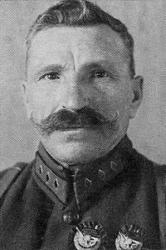
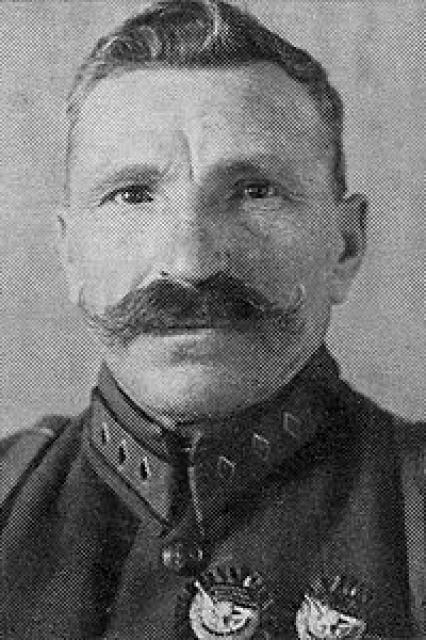
Stepan Zotov rose from a Don Cossack background to become one of the Red Army’s senior cavalry commanders. A veteran of the First World War and the Russian Civil War, he moved from the saddle to increasingly important command and staff roles, eventually overseeing cavalry affairs across the army. His image was also preserved in a 1936 portrait study for a major painting of the First Cavalry Army.
A Don Cossack in the imperial army
Zotov was born on November 23, 1882, in the Don region, in the village of Golubinskaya, into a Cossack family. He entered military service in 1904 and served in the 4th Don Cossack Regiment named for Count Platov and later the 3rd Don Cossack Regiment named for Yermak Timofeyevich. He completed a school for junior officers in 1910 and, in 1917, graduated from the Tiflis Military School.
During the First World War, Zotov served as a Cossack officer, reaching the rank of khorunzhy, roughly comparable to a junior commissioned officer. Accounts of his wartime service credit him with four St. George Crosses and three medals for bravery. Those decorations testified to a frontline career that began well before the revolutionary upheavals changed the army and the country.
From the Don to the First Cavalry Army
In 1918, Zotov joined the Red Army and helped organize pro-Bolshevik partisan forces on the Don. He moved through a series of cavalry and staff assignments during the Civil War, including command of a cavalry brigade, operational work with the 1st Cavalry Corps, and service as chief of field staff of the 1st Cavalry Army. This combination of field command and planning became a hallmark of his career.
After the war, he continued in leadership positions and studied at the Red Army Military Academy, graduating in 1923. He commanded cavalry divisions and, from 1929 to 1932, the 4th Cavalry Corps. By then he had moved from wartime improvisation into the professional command structure of the expanding Soviet military.
A cavalry specialist at the top
Zotov’s later posts focused on the organization and readiness of mounted forces. From 1932 to 1934, he headed the Red Army’s department responsible for horse resources, and from 1934 served first as assistant and then deputy inspector of cavalry. In November 1935 he received the rank of komkor, or corps commander, one of the senior command ranks introduced during the Red Army’s reorganization.
His decorations reflected both phases of his service. In addition to the St. George Crosses from the imperial army, he received two Orders of the Red Banner and the Order of the Red Star. He also became one of the commanders associated with the story of the First Cavalry Army, the celebrated formation led by Semyon Budyonny during the Civil War.
A portrait and a sudden end
In 1936, artist Alexander Gerasimov painted a portrait study of Zotov as part of his preparations for the large composition The First Cavalry Army. The study captured a commander whose life connected the Don Cossack military tradition with the emerging Soviet army. The finished painting, featuring dozens of cavalry figures, later became one of Gerasimov’s best-known works.
Zotov died in Moscow on September 29, 1938, at the age of 55, in a military hospital following an operation. His career had spanned a dramatic transition in Russian military history: from service in the imperial cavalry, through revolution and civil war, to senior responsibility in the Red Army.