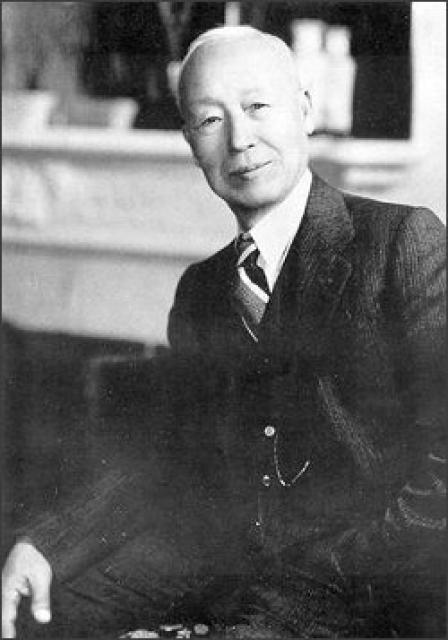
Synman Lie
 North Korea
- Syngman Rhee: The First President of South Korea
- Independence Movement and Exile
- Return to Korea and Struggle for Independence
- World War II and Return to Seoul
- Founding of South Korea and Presidency
- Korean War and Domestic Turmoil
- Exile and Death
Syngman Rhee: The First President of South Korea
Early Life and EducationSyngman Rhee, the founding president of South Korea, was born on April 26, 1875, into an aristocratic family with a lineage tracing back to the Lee Dynasty. As a young man, he excelled academically, placing first in a nationwide examination in Chinese classical literature. He then attended the Methodist mission school, Paichai, where he studied English and encountered democratic ideals.
Independence Movement and Exile
Rhee joined the Independence Club, an organization advocating for democratic reforms against the monarchy. In 1897, he was arrested as a leader of the movement and imprisoned. During his incarceration, he converted to Christianity and penned "The Spirit of Independence," a seminal work in Korean liberalism. After his release, Rhee pursued higher education in the United States, earning degrees from George Washington University, Harvard University, and Princeton University.
Return to Korea and Struggle for Independence
Returning to Korea, Rhee soon went into exile in Hawaii, where he edited a newspaper advocating for Korean independence. In 1919, after the March First Movement, he was elected president of the Korean government-in-exile. For the next 25 years, he led the Korean Commission in Washington, D.C., tirelessly lobbying for Korea's liberation.
World War II and Return to Seoul
During World War II, Rhee remained in Washington and advised the U.S. War Department on the establishment of an underground network in Korea. After the war, he returned to Seoul on October 16, 1945, and spent the next three years promoting democratic ideals.
Founding of South Korea and Presidency
On May 10, 1948, following the United Nations' initiative, the Republic of Korea was declared, with Rhee as its first president. His administration introduced universal primary education and land reform, transferring 54% of landlord-owned lands to tenants.
Korean War and Domestic Turmoil
During the Korean War, Rhee rallied his people, who remained loyal even when most of the country was under communist control. He was re-elected in 1952, 1956, and 1960. However, the latter election was marred by widespread ballot-stuffing, triggering an uprising and eventually leading to Rhee's resignation on April 27, 1960.
Exile and Death
In May 1960, the former president left Korea and settled in Hawaii, where he remained until his death on July 19, 1965.


