
Taksin Chinavat
 Thailand
- Biography of Thaksin Shinawatra
- Early Life and Career
- Political Career
- Exile and Later Political Activities
Biography of Thaksin Shinawatra
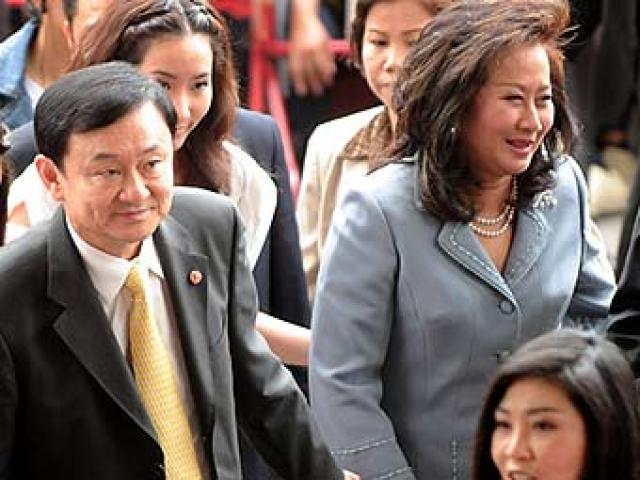
Thaksin Shinawatra, the former Prime Minister of Thailand, was ousted as a result of the September 2006 coup. He was the first head of government in the country's history to hold power for a full four-year term. Starting his career in the police force, he later became a prominent telecommunications magnate. In 2007, he acquired the football club Manchester City.
Early Life and Career
Thaksin Shinawatra was born on July 26, 1949, in Chiang Mai, a city in northern Thailand. He began his career as a police officer and was awarded a government scholarship in 1973 to study in the United States. In 1975, he graduated from the University of Kentucky with a master's degree in criminal justice. In 1978, he obtained his doctoral degree from the University of Houston.

Returning from the US, Thaksin resigned from the police force in 1987 and pursued entrepreneurship. He utilized his connections to establish a software company and later founded a major telecommunications corporation. By the mid-1990s, Thaksin ranked 18th on the list of the world's richest people.
Political Career
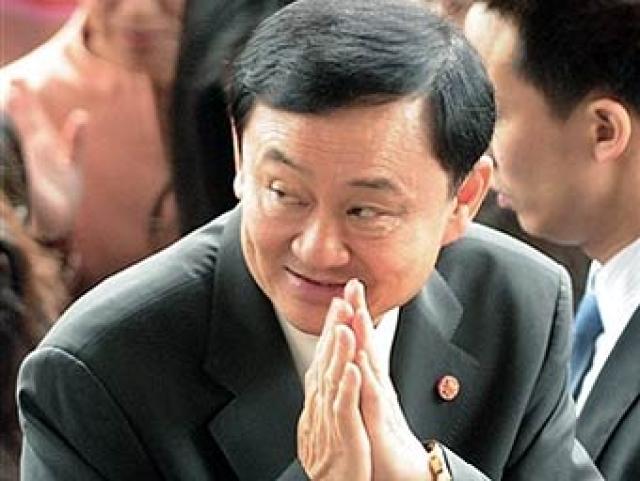
Thaksin's political career began in 1994 when he assumed positions as the Minister of Foreign Affairs and Deputy Prime Minister. In 1998, he founded the Thai Rak Thai (TRT) party, which achieved a decisive victory in the 2001 general elections, leading Thaksin to become the country's prime minister. His policies, such as reducing healthcare costs and providing deferred payments for farmers' loans, gained support from rural residents.

Among his achievements as prime minister were the economic growth that began during his tenure and the successful handling of the 2004 tsunami aftermath. In 2005, Thaksin's party won another victory in the general elections. However, his popularity waned in urban areas due to controversies such as concealing information about bird flu outbreaks, employing harsh methods to combat crime, and the armed uprising in the Muslim-majority southern region that started in 2004.
The most significant public outrage was sparked by a deal made by Thaksin's relatives in January 2006. They sold their shares in the family-owned Shin Corp to Singaporean investors. Critics alleged that the prime minister's relatives evaded taxes and transferred a strategically important enterprise for the national economy to foreign ownership.
Mass protests and demands for his resignation led Thaksin to call for early elections in April 2006. The main opposition forces boycotted the elections, and the Constitutional Court nullified TRT's victory. Thaksin resigned but resumed his duties as prime minister in May. Repeat elections were scheduled for later that year.
Exile and Later Political Activities
On September 19, 2006, while Thaksin was attending the United Nations General Assembly in New York, a group of military leaders, led by Army Commander-in-Chief Sonthi Boonyaratglin, staged a coup and stripped the government of all powers. Thaksin was forced to remain abroad and traveled to the United Kingdom from the US, where he owned personal apartments.
During his exile, in July 2007, Thaksin acquired the English football club Manchester City. In May 2007, the TRT party was dissolved by the Thai Constitutional Court, and its supporters later rallied around the lesser-known People's Power Party (PPP). In December 2007, the PPP achieved a decisive victory in the Thai elections, gaining control of nearly half of the parliamentary seats and announcing its readiness to form a coalition government.
Thaksin, on his part, stated his intention to return to the country in early 2008. He fulfilled this promise by arriving in Thailand on February 28, 2008. He faced corruption and abuse of power charges, but was released on bail.



