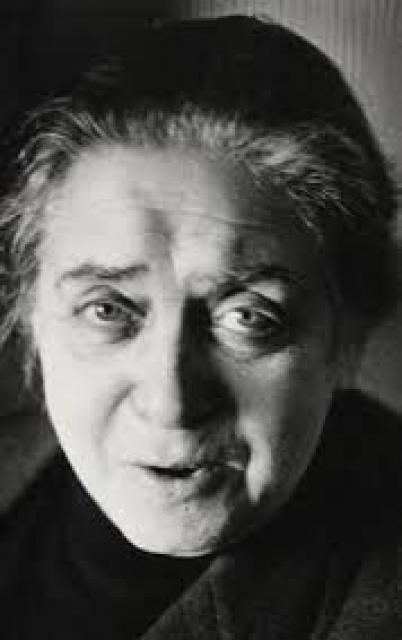
Therese Giehse
 Germany
- Early Life and Acting Career
- Anti-Nazi Cabaret and Exile
- Swiss Career and Association with Brecht
- Return to Western Germany and Zurich
- Cinematic Career
Early Life and Acting Career
Teresa Giehse began her acting career with private lessons and spent the years 1920-1926 performing in provincial German theaters in cities such as Giessen, Gleiwitz, and Landshut. From 1926 to 1933, she became part of Otto Falckenberg's Munich Kammerspiele.
Anti-Nazi Cabaret and Exile
In 1933, Giehse joined Klaus Mann and Erika Mann in establishing the Munich political cabaret "Pfeffermühle," which opposed the Nazi regime. Facing increasing danger, she and her colleagues emigrated to Switzerland in 1934, where the cabaret continued its work. Throughout the late 30s, the troupe toured extensively in Czechoslovakia, Belgium, the Netherlands, and the United States.
Swiss Career and Association with Brecht
During World War II, Giehse remained in Switzerland and joined the Schauspielhaus Zürich as an actress in February 1937. She also performed at theaters in Bern, Lucerne, and the Basel City Theater. Her theatrical career intersected significantly with the playwright Bertolt Brecht, as she became the first actress to play the protagonist in his play "Mother Courage and Her Children" at the Schauspielhaus Zürich in 1941. Giehse joined Brecht's newly founded Berliner Ensemble in East Berlin in 1949.
Return to Western Germany and Zurich
In 1952, Giehse made the decision to move to West Germany, returning to the Kammerspiele in Munich, where she performed until 1974. Simultaneously, she continued to guest star regularly at the Schauspielhaus Zürich until 1966, where her notable roles included Celestine in the premiere of Max Frisch's "Don Juan: or The Love of Geometry" and the lead in the first productions of Friedrich Dürrenmatt's "The Visit of the Old Lady" (1956) and "The Physicists" (1962), in which the playwright reworked a male role specifically for Giehse to play as Mathilde von Zahnd.
Cinematic Career
Giehse's film career was more modest, with supporting roles in films such as Julien Duvivier's "Anna Karenina." However, she landed a few lead roles, including in the GDR television adaptation of Gorky's "Vassa Zheleznova" in 1963. Her final cinematic appearance was in Louis Malle's "Black Moon," which was dedicated to her memory and released posthumously after she passed away from her home in Zurich.


