Tsai Ingwen
 Taiwan
- Tsai Ing-wen: President of the Republic of China
- Political Career
- Presidency
- LGBTQ+ Rights
- Defense Policy and Indigenous Peoples
- Energy Policy
- Labor Reform
- Judicial Reform
- National Languages
- New Southbound Policy
- Personal Life
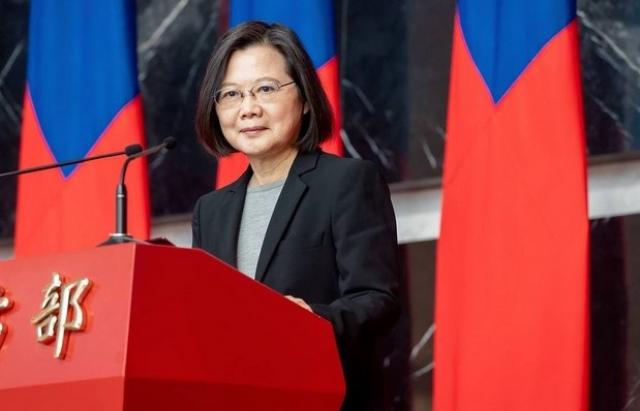
Tsai Ing-wen: President of the Republic of China
Early Life and EducationTsai Ing-wen was born on August 31, 1956, in Taipei, Taiwan. She graduated with a law degree from National Taiwan University in 1978 and went on to earn a master's degree in law from Cornell University in 1980. In 1984, she completed her PhD in law from the London School of Economics.
Political Career
Tsai Ing-wen returned to Taiwan and taught law at several universities. During the 1990s, she became involved in the negotiations for Taiwan's entry into the World Trade Organization. She served as an advisor on security during President Lee Teng-hui's administration (1996-2000).
From 2000 to 2004, Tsai held the position of Minister of Mainland Affairs. In 2004, she joined the Democratic Progressive Party (DPP). Following a successful Legislative Yuan election in 2004, she became vice premier of the Republic of China in 2006. However, she resigned along with the entire cabinet under Premier Su Zhenchang in 2007.
In 2008, Tsai was elected as chair of the DPP. She was the DPP's candidate in the 2012 presidential election. Despite receiving 45.6% of the vote, she lost the election and stepped down as party chair.
Tsai was re-elected as DPP chair in 2014. She won the 2016 presidential election, becoming the first female president of the Republic of China.
Presidency
Tsai's presidency has been marked by a focus on:Taiwan-China Relations
Tsai advocates for the independence of Taiwan and has been a vocal critic of closer ties with mainland China. However, she also seeks to maintain the status quo in economic cooperation with China.
LGBTQ+ Rights
Tsai supports the legalization of same-sex marriage, arguing that it is a measure of equality and human rights. She approved the legalization of same-sex marriage in Taiwan in 2019.
Defense Policy and Indigenous Peoples
Under Tsai's administration, Taiwan's military spending has increased relative to its GDP. The focus has also been on defense self-sufficiency and developing domestic industries. Tsai has also become the first president to formally apologize to the indigenous peoples of Taiwan.
Energy Policy
Tsai's goal is to shift electricity generation towards renewable sources, including offshore wind energy. Projects are underway to develop local manufacturing and supply chains, as well as attract foreign investments.
Labor Reform
Tsai has implemented labor reforms that include a 40-hour, five-day work week. However, the reforms have faced criticism for reducing overall wages and increasing the cost of living.
Judicial Reform
Tsai's administration has proposed a system of lay judges modeled on the jury system in Japan. The Civil Judge Act was passed in 2020, establishing a system of lay judges consisting of three professional judges and six lay judges.
National Languages
Tsai has expanded the recognition of national languages in Taiwan. Hakka was designated as a national language in 2017, and sixteen indigenous Formosan languages were recognized in 2018.
New Southbound Policy
Tsai launched the New Southbound Policy in 2016 to reduce Taiwan's dependence on mainland China and enhance cooperation with other countries. The policy targets 18 countries in Southeast Asia, South Asia, and Oceania for collaboration in areas such as trade, technology, and education.
Personal Life
Tsai Ing-wen is not married and has no children. She is the first president with both Hakka and indigenous Taiwanese ancestry. She is an avid cat lover and has been known to feature her cats prominently in her election campaigns.