Tsola Dragoycheva
 Bulgaria
- Teaching and Revolutionary Politics
- Exile, Resistance, and Return
- Senior Office and a Contested Legacy
- Final Years
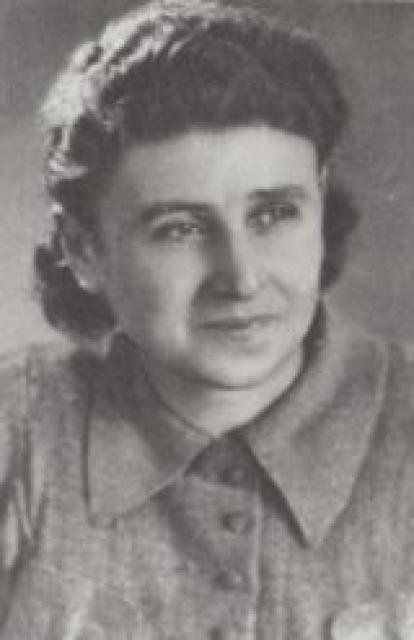
Tsola Dragoycheva’s life traced a dramatic arc through Bulgaria’s twentieth century: from a village schoolteacher and underground communist to a senior party leader and the country’s first woman cabinet minister. Known in the party by the name Sonya, she spent years in prison and exile before returning to help shape the state that emerged after 1944. Her legacy also carries the weight of the repression and political trials that accompanied communist rule.
Teaching and Revolutionary Politics
Born on August 30, 1898, in Byala Slatina, Dragoycheva trained as a teacher at the Higher Pedagogical Institute in Sofia, graduating in 1921. She joined the Bulgarian Communist Party in 1919 and took part in labor activism and the September Uprising of 1923. Her political work cost her teaching posts and brought a 15-year prison sentence, though an amnesty freed her in 1924.
After the St. Nedelya Church bombing in Sofia in April 1925, carried out by communist militants, Dragoycheva was arrested again during the crackdown and sentenced to death for anti-state activity. She gave birth to her son, Chavdar, in prison. Because she was pregnant, the sentence was not carried out and was commuted to life imprisonment in 1926. A general amnesty released her in 1932.
Exile, Resistance, and Return
After leaving prison, Dragoycheva went to the Soviet Union, where she studied at the International Lenin School in Moscow and worked with the Comintern’s International Women’s Secretariat. She returned to Bulgaria in 1936 and rose through the Communist Party’s underground leadership. Arrested in 1941, she escaped from the St. Nikola labor camp later that year. In 1942, a court sentenced her to death in absentia for her political activity.
During World War II, she worked with the communist-led Fatherland Front, which opposed Bulgaria’s alignment with Nazi Germany. Following the Front’s seizure of power on September 9, 1944, she became its general secretary and emerged as a prominent figure in the new government.
Senior Office and a Contested Legacy
From 1947 to 1957, Dragoycheva served as minister of posts, telegraphs, and telephones, becoming Bulgaria’s first woman minister. She also led the Bulgarian People’s Women’s Union and later chaired the All-People’s Committee for Bulgarian-Soviet Friendship. She remained a member of parliament until 1990 and held senior positions in the Communist Party’s Politburo across several decades.
Her long influence remains debated. Historians recognize her role in expanding women’s participation in public life and in the antifascist movement, while also examining her place in the ruling party’s consolidation of power. Historical accounts associate her with campaigns against political opponents, including Nikola Petkov and Traicho Kostov, and with the cultural controls of the period; scholarship cautions that the precise extent of her responsibility remains difficult to establish.
Final Years
Dragoycheva remained active in party life into old age and published a three-volume memoir, *The Call of Duty*, about her political journey. She died in Sofia on May 26, 1993, aged 94. Her biography reflects the intersecting histories of communist activism, women’s public leadership, wartime resistance, and one-party rule in Bulgaria.