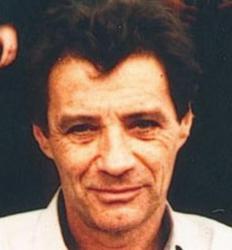
Tsutomu Murata
 Japan
- Engineering and naval service
- From military propellants to scientific rockets
- Leadership in industry
- Writing and later years
Tsutomu Murata was a Japanese engineer whose long career bridged military explosives research, postwar industrial leadership and the first steps of Japan’s space program. His technical work with solid propellants helped Hideo Itokawa’s team move from small experimental rockets toward a homegrown launch technology, while his later years at Nippon Oil & Fats put him at the helm of one of Japan’s major chemical manufacturers.
Engineering and naval service
Born in Kumamoto Prefecture on June 3, 1909, Murata trained as an engineer and entered technical work at a time when Japan’s military was investing heavily in explosives and rocket systems. He served for about 12 years in the Imperial Japanese Navy, working in the naval arsenal system and specializing in explosives and propellants. During the Second World War, his work included the development of military rockets; later accounts of Japan’s rocket history describe him as a central figure in a rocket project associated with the attack on Corregidor.
The wartime work was demanding and closely tied to the needs of the Navy, but it also gave Murata practical experience with the chemistry, manufacture and shaping of solid propellants. One of the technical problems was how to produce a consistent propellant grain suitable for a rocket motor. A retrospective by the Hiratsuka City Museum credits Murata with designing an extrusion press used to form solid motor propellant. That manufacturing knowledge would prove useful in a very different setting after Japan’s defeat.
From military propellants to scientific rockets
After the war, Murata joined Nippon Oil & Fats, later known as NOF, at its Taketoyo works. Japan’s military industries were being dismantled and reorganized, and engineers had to redirect specialized knowledge into civilian production. Murata became one of the rare specialists in solid rocket propellant available to the fledgling research teams exploring spaceflight.
In early 1954, engineer Yasuyasu Toda visited Murata at the Taketoyo factory to discuss propellant for a small experimental rocket. Murata offered smokeless powder from rocket ammunition as a possible starting material. The encounter helped connect the industrial expertise at Nippon Oil & Fats with Hideo Itokawa’s group at the University of Tokyo. The following year, the group’s Pencil rocket was tested horizontally at Kokubunji. The vehicle was tiny, but the experiment gave Japanese researchers a practical foundation for the larger solid-fuel rockets that followed.
Murata’s contribution was not simply the supply of a material. Developing a reliable rocket motor required collaboration between researchers and manufacturers, along with careful attention to how propellant behaved when shaped and burned. His experience helped make that exchange possible. Nippon Oil & Fats continued to support rocket development as Japan’s research program grew, and Murata’s role became part of the story of how techniques first developed for military purposes were redirected toward scientific exploration.
Leadership in industry
Murata’s career also advanced within the company. He rose through technical and management posts and became president of Nippon Oil & Fats in 1967, serving until 1977. His tenure placed him in charge of a business with activities far beyond rocketry, including chemicals, explosives and industrial materials. He later served as chairman and took part in industry organizations, including the association representing Japan’s oil and fat manufacturers.
That combination of engineering and executive work gave his career an unusual breadth. Murata remained connected to the practical realities of production while helping guide a large company through Japan’s rapid postwar economic expansion. His work in rocketry was one part of a much wider industrial legacy, but it gave the company a distinctive place in the country’s early space effort.
Writing and later years
Murata also recorded parts of his professional life in books. The titles include a volume of recollections and reflections by a technical business leader from Kumamoto, and a memoir whose subtitle contrasts 12 years in the Navy with 45 years in company service. These works offer a first-person perspective on a career that moved from military laboratories and factories to corporate leadership and the beginnings of Japan’s space program.
He died on January 30, 2000. In accounts of early Japanese rocketry, Murata is remembered as a key link between industrial know-how and scientific ambition: an engineer whose propellant expertise helped a small pencil-shaped test vehicle become an opening chapter in Japan’s postwar journey into space.