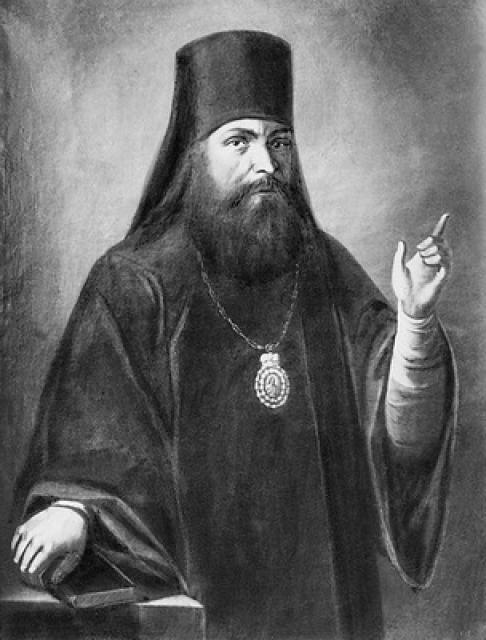
Varlaam Lenitskiy
 Russia
- A Life of Ecclesiastical Service
- Early Life and Education
- Diplomatic Missions
- Pilgrimage and Imprisonment
- Episcopal and Archiepiscopal Service
- Retirement and Death
A Life of Ecclesiastical Service
Варлаам (Леницкий), born in Kiev in the late 17th century, was a prominent figure in the Russian Orthodox Church. His ecclesiastical career spanned several decades and culminated in his elevation to the rank of archbishop.
Early Life and Education
据说 Varlaam descended from the Polish noble family of Lenicki-Rogali. He was born and raised in Kiev, and received his education at the Kiev-Mohyla Academy. After graduating, he served as a monk in the Hustyn Monastery in Ukraine.
Diplomatic Missions
In 1711, Varlaam played a role in the Prut Campaign by acting as a chaplain to Boris Sheremetev. He then served as a priest in the diplomatic embassy to Adrianople and Istanbul led by Sheremetev and Peter Shafirov. Varlaam's experiences in these missions provided valuable insights into international relations.
Pilgrimage and Imprisonment
Between 1712 and 1713, Varlaam embarked on a pilgrimage to Jerusalem. However, when Turkey declared war on Russia, he attempted to flee to Venice but was captured by the Turks in Cyprus and imprisoned. After his release in 1714, he returned to Constantinople and worked on his "Pilgrimage," a significant text on Russo-Turkish relations during the early 18th century.
Episcopal and Archiepiscopal Service
In 1719, Varlaam was consecrated as Bishop of Suzdal and Yuryev. During his tenure, he was involved in the oversight of Peter I's first wife, Elena Lopukhina, who was held in the Pokrovsky Monastery in Suzdal. However, in 1722, he was deprived of his episcopal rank due to irregularities in the diocese and allegations of excessive drinking and bribery.
After a period of disgrace, Varlaam was restored to episcopal office in 1724 as Bishop of Kolomna and Kashira. Under his leadership, an archdiocesan school was established in Kolomna for the education of clergy. Varlaam participated in the coronation of Catherine I and the funeral of Peter I, and published a sermon in 1726.
In 1727, Varlaam was transferred to Astrakhan, a city ravaged by plague. During his time there, he established a Slavic-Latin school to provide education for children of the clergy and other social classes. Upon his departure from Astrakhan in 1730, the school was closed due to lack of support.
Varlaam was subsequently appointed Bishop of Pereyaslavl and Boryspil, and Vicar of the Kiev Eparchy. In 1731, he became Bishop of Pskov and was promoted to the rank of archbishop in 1739.
Retirement and Death
In 1738 or 1739, Varlaam retired to the Kiev-Pechersk Monastery, where he lived until his death in 1741. He is buried in the Kiev-Pechersk Lavra, a testament to his lifelong dedication to the Orthodox Church.


