Verner Heisenberg
 Germany
- Werner Heisenberg: The Father of Quantum Mechanics
- Early Life and Education
- Contributions to Quantum Mechanics
- The Uncertainty Principle
- Nuclear Physics and Beyond
- Influence on Modern Physics
- Later Years and Legacy
Werner Heisenberg: The Father of Quantum Mechanics
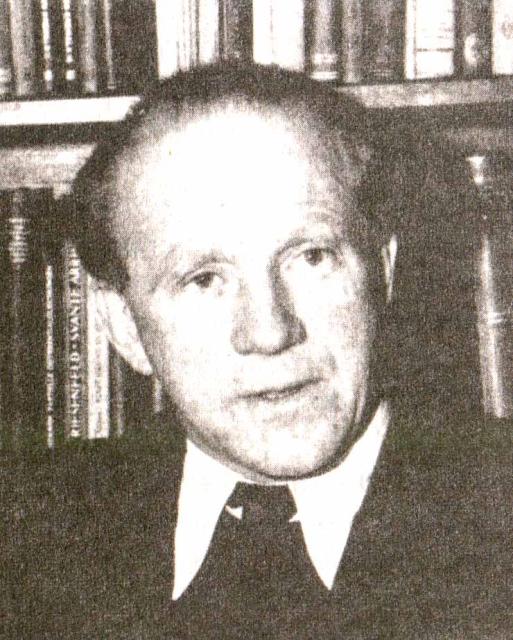
Werner Karl Heisenberg (1901-1976) was a German theoretical physicist and one of the founders of quantum mechanics. His groundbreaking contributions earned him the Nobel Prize in Physics in 1932.
Early Life and Education
Heisenberg was born in Würzburg, Germany, in 1901. He studied mathematics and physics at the University of Munich, where he earned his doctorate in theoretical physics in 1923.
Contributions to Quantum Mechanics
In 1925, Heisenberg published his first major work on quantum mechanics, in which he introduced the concept of matrix mechanics. This approach, along with Erwin Schrödinger's wave mechanics, laid the foundation for the mathematical framework of quantum mechanics.
The Uncertainty Principle
In 1927, Heisenberg formulated one of the most fundamental principles in physics: the uncertainty principle. It states that there is a fundamental limit to the precision with which certain pairs of physical properties, such as position and momentum, can be known simultaneously.
Nuclear Physics and Beyond
Heisenberg also made significant contributions to nuclear physics. He introduced the proton-neutron model of the atomic nucleus in 1932 and developed the matrix scattering theory in 1943. His work had far-reaching implications, influencing fields such as quantum electrodynamics, field theory, quantum theory of ferromagnetism, and philosophy of science.
Influence on Modern Physics
Quantum theory, as developed by Heisenberg and his contemporaries, has had a profound impact on our understanding of the physical world. It has led to the development of advanced technologies like electron microscopes, lasers, and transistors. Heisenberg's work continues to shape our understanding of the subatomic realm, from particle physics to astrophysics.
Later Years and Legacy
Heisenberg remained active in research and teaching throughout his life. He died in Munich in 1976, leaving behind an enduring legacy as one of the most influential physicists of the 20th century. His contributions to quantum mechanics and his deep insights into the nature of physical reality have revolutionized our understanding of the universe.