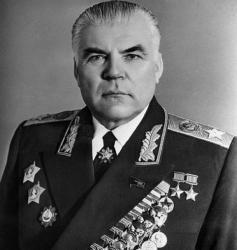
Viktor Chernavyn
 Russia
- Biography of Vladimir Chernavyn
- Early Life and Education
- Military Career
- World War I
- Russian Civil War
- Odessa Evacuation and Post-Civil War
- Later Life and Death
- Literary Contributions
Biography of Vladimir Chernavyn
Vladimir Vladimirovich Chernavyn was a Russian general who served in the White movement during the Russian Civil War.
Early Life and Education
Chernavyn was born in Omsk, Siberia, and completed his secondary education at the Omsk Gymnasium. He then attended the Nikolaev Engineering School and the Nikolaev General Staff Academy, graduating in 1904.
Military Career
After graduating from the Engineering School, Chernavyn was commissioned into the 3rd Sapper Battalion. Following his graduation from the General Staff Academy, he volunteered for service in Manchuria during the Russo-Japanese War, where he served as a senior adjutant on the staff of the 3rd Army Corps.
After the war, Chernavyn served in the Vilna Military District as an officer for special assignments on the district staff. In 1911, he was promoted to lieutenant colonel and appointed to teach military science at the Vilna Military School.
World War I
At the outbreak of World War I, Chernavyn joined the staff of General Pavel Rennenkampf's 1st Russian Army. He served as a senior adjutant in the operations department of the army's headquarters. In December 1914, he was promoted to colonel and awarded the Order of St. George for his combat achievements. From November 1915, he commanded the 24th Simbirsk Infantry Regiment. In December 1916, he was appointed chief of staff of the 36th Infantry Division.
Russian Civil War
In 1917, Chernavyn was promoted to major general and became acting quartermaster general of the 6th Army. He joined the Volunteer Army in 1918 and was appointed quartermaster general of the Crimean-Azov Army, which was in the process of formation. When the army was reorganized into the 3rd Army Corps in 1919, Chernavyn became its chief of staff. After the corps launched an offensive across the Dnieper River in the summer of 1919, he was appointed chief of staff to General Schilling, who was now commanding the Novorossiysk Oblast.
Odessa Evacuation and Post-Civil War
In January 1920, Chernavyn was sent to Sevastopol to secure the transportation and supplies needed for the evacuation of troops, cadets, and military families from Odessa. He obtained a commitment from the British Royal Navy to provide two transports for the evacuation. However, the arrival of the transports was delayed, and the evacuation was ultimately a disaster due to lack of coal and frozen ports.
After the Crimean-Azov Army was evacuated from Odessa, Chernavyn settled in Czechoslovakia. In Prague, he was commissioned by the Zemgor (Union of Russian Military Organizations) to collect historical materials and documents on the Russian Revolution and Civil War. This archival activity was financed by the Czechoslovak Ministry of Foreign Affairs. In 1928, Zemgor transferred the Russian Historical Foreign Archive to the Ministry of Foreign Affairs, and Chernavyn became a full-time employee of the archive.
Later Life and Death
Chernavyn remained active in the Russian Historical Foreign Archive until 1938, when the archive was transferred to the Czechoslovak Ministry of the Interior. After this, Chernavyn was no longer listed as an employee of the archive.
In 1945, Chernavyn was arrested by the Soviet counterintelligence agency SMERSH but was released later that year. He lived in Prague until 1955, when he was evicted and moved to Olomouc in Moravia. He passed away in Olomouc in 1956 from pneumonia.
Literary Contributions
Chernavyn translated several books from German into Russian, including Walther Beckman's "The Germans in the Russian Army." He also left extensive memoirs on the Russo-Japanese War and General Rennenkampf's activities in 1914. His memoirs were deposited in the Russian Historical Foreign Archive in Prague.