Viktor Grigorovich
 Ukraine
Biography of Viktor Grigorovich
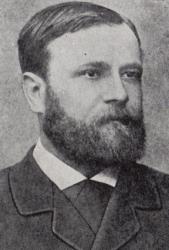
Viktor Ivanovich Grigorovich was a renowned historian, Russian philologist, and Slavist professor who taught in Kazan, Moscow, and Odessa. He was born on April 30, 1815, in Balti, where his father served. His mother was a Catholic, and the family predominantly spoke Polish. Grigorovich received his education in Balti and Uman at a Basilian school, and later attended Kharkov University. After completing his studies there, he spent four years in Derpt (now Tartu), diligently studying philosophy and classical philology.
In 1839, Grigorovich was invited to Kazan to teach Slavic dialects. In 1840, he presented his doctoral thesis, "A Study on the Church Slavonic Dialect," in which he expressed support for the Pannonian theory of the origins of the Church Slavonic language. He then traveled abroad and upon his return, published his master's dissertation, "An Attempt to Present Slavic Literature in its Major Epochs." This work was the first scholarly publication in Russia to examine Slavic literature from a Slavic perspective, analyzing the logical sequence and necessity of various Slavic historical and literary facts. Grigorovich not only compared Russian and Polish literature as parts of a whole but also compared literary facts from nations that were previously not recognized to have any literature.
In 1844, Grigorovich embarked on a research trip to Slavic lands, primarily within European Turkey. This journey was a sort of scholarly martyrdom, requiring exceptional energy and devotion to his work. The details and some of the results of his journey were published in his book "A Sketch of a Journey through European Turkey" (in the "Scientific Notes of Kazan University," 1848, vol. III, and separately in the 2nd edition, Moscow, 1877).
As a professor, Grigorovich attracted students with his extraordinary approachability and camaraderie. They would frequently gather at his place. In 1849, his valuable work in Kazan was interrupted when he was transferred to Moscow to replace Bodiansky. Although he felt uncomfortable at Moscow University, to which he was somewhat forced, Grigorovich hardly gave any lectures. However, his vast knowledge and precious collection of manuscripts, brought from Slavic lands and Mount Athos, served the cause of science and sparked interest in paleography, particularly in F.I. Buslaev and others. Grigorovich returned to Kazan and from 1854 to 1856, in addition to the university, he taught at the Kazan Theological Academy, where he also trained several valuable scholars.
In 1865, Grigorovich was appointed a professor at the newly established Novorossiysk University in Odessa. He was attracted to Odessa due to its proximity to the Slavs, ancient Byzantium, and its diverse population, among whom one could learn languages even without a lexicon. Odessa also appealed to him as a scientific center in the extensive region, preserving remnants of a rich past. For the new university, Grigorovich was a valuable acquisition, as he possessed youthful energy, despite being fifty years old, and was ready to guide students as their senior comrade. He spent eleven years in Odessa, leaving behind grateful memories, as well as a whole school of Slavists, historians, and archaeologists.
In 1876, Grigorovich resigned and moved to Yelizavetgrad, from where he planned to make excursions to various parts of southern Russia. However, on December 19 of the same year, he suddenly passed away. His students and admirers immediately began collecting donations for the construction of a monument in his honor. Thanks to the efforts of the newly established Historical and Philological Society at Novorossiysk University, the monument was unveiled at Grigorovich's grave on October 18, 1892.
Grigorovich's scientific works may not be extensive, but each one is undoubtedly independent and deeply imbued with the unity of his original worldview. He clearly recognized the unique tasks of Russian scholarship, particularly in the study of Byzantium and Slavic culture, where he pointed out the vast and fertile field available for exploration, offering a preference for historical research. Alongside Buslaev and others, he was a founder of scientific, historical Slavophilism, in contrast to the Moscow Slavophilism which had a semi-philosophical, semi-poetic nature.
Grigorovich's major works, in addition to those mentioned above, include "Articles on Old Slavic Language" (Kazan, 1852), "Description of the Four Gospels Written in Glagolitic Script" ("Proceedings of the Academy of Sciences, Division II," vol. II, 1852), "Letter from the Russian Metropolitan John II" ("Scientific Notes, Division II, Academy of Sciences," vol. I, 1854), "On Serbia's Relations with Neighboring States in the 14th - 15th Centuries" (Kazan, 1859), "Old Slavic Monument Supplementing the Life of the Holy Apostles Cyril and Methodius" (Kazan, 1862), "How the Constantinople Church Engaged with Northern Nations in the Early 10th Century" (Odessa, 1866), "From the Annals of Slavic Scholarship" ("Notes of Novorossiysk University," vol. VI, 1871), "Jan Amos Comenius, an 18th-century Slavic Pedagogue-Realist" (Odessa, 1871), "Notes of an Antiquarian about His Trip to the Caucus and Calamus," "On the Participation of the Serbs in Our Social Relations" ("Notes of Novorossiysk University," vol. XXI, 1876).
After Grigorovich's death, several of his abstracts were published in the "Proceedings of the Kyiv Archaeological Congress," and three of his university courses were published by Professor Smirnov in Warsaw and Voronezh. Some of his valuable manuscripts, brought from Slavic lands and Mount Athos, were donated to Novorossiysk University at its founding (the description by V. Mochulsky was published in the first issue of the "Chronicles of the Historical and Philological Society," Odessa, 1890). The remaining manuscripts, papers, and incunabula were acquired by the Rumyantsev Museum.
Sources: Sreznevsky's "Collection of the Russian Language and Literature Division of the Academy of Sciences," XVIII; Murzakevich's "Notes of the Odessa Society of History and Antiquities," XI; Uspensky's "Memoirs of Grigorovich" ("Chronicles of the Historical and Philological Society," 1890); Kirpichnikov's "A.Ya. Comenius. V.I. Grigorovich" (Odessa, 1893), and others. The most extensive collection of materials can be found in the "Slavic Review," July 1892, and onwards. See Vengerov's "Sources of the Dictionary of Russian Writers" and Yagich's "Slavic Encyclopedia." A. Kirpichnikov.