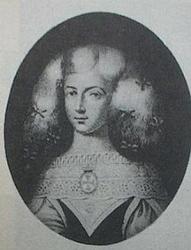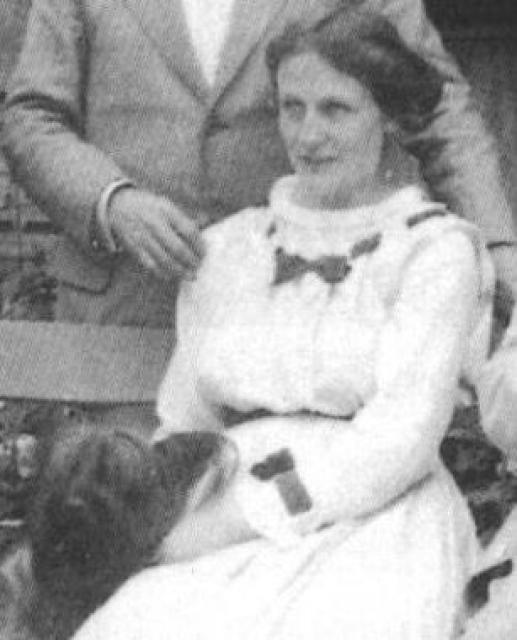
Vinnifred Vagner
 Germany
Biography of Winifred Wagner
Winifred Wagner, born in Brecon, Wales, United Kingdom, was the daughter of a British father and a German mother. At the age of two, Winifred became an orphan and was taken in by her German relatives, leading her to live in Berlin. Her adoptive father, Karl Klindworth, a pupil of Franz Liszt and a respected pianist, musicologist, and composer, was highly regarded in high society. Winifred, changing her Welsh name to the more German-sounding Winifred, became part of the Berlin social elite. It was there that she met Siegfried Wagner, the son of Richard Wagner, who was Adolf Hitler's favorite composer. Winifred, who had always been fascinated by Wagner's operas, immediately fell in love with Siegfried upon meeting him. In 1915, at the age of 17, Winifred married the 25-year-older Siegfried. The wedding caused a sensation, as Siegfried had never hidden his homosexual inclinations, despite being unwelcome in many Munich and Berlin households due to his non-traditional sexual orientation. It was rumored that the marriage provided Siegfried with "social rehabilitation". However, their marriage was not happy, despite the birth of their four children.
In 1923, Winifred met the aspiring politician Adolf Hitler and, under his influence, joined the National Socialist German Workers' Party (NSDAP). In 1924, while Hitler was imprisoned in Austria, Winifred organized fundraising events for the "political prisoner". "I asked him what he needed the most," she recalled. "He replied, 'paper.' And so, I started sending him paper." (Siegfried Wagner wrote about this: "My wife fights for Hitler like a tigress. In my opinion, it's magnificent!") After the war, Winifred was accused of having the "Mein Kampf" written on her paper.
In 1930, Winifred became a widow, and Hitler became a frequent guest in the Wagner family's home in Bayreuth. According to official accounts, they had "close friendly relations". There were rumors that Adolf planned to marry Winifred. British historians have now found documentary evidence to support this claim. According to the BBC, Welsh historian Louis Guillem discovered love letters exchanged between Richard Wagner's daughter-in-law and the author of "Mein Kampf". Guillem claims that historical documents unequivocally show that "Winifred and Adolf undoubtedly adored each other and were close to getting married." Winifred kept a photograph of the Führer on her bedside table, and her four children considered Hitler their "second father". Thanks to them, the Nazi dictator acquired the nickname "Uncle Wolf". Hitler consistently signed all his letters and photos to Winifred as "Kapellmeister Wolf" (Kapellmeister being a military conductor). Guillem refuted the claim that Winifred and Adolf had a sexual relationship, stating, "She was waiting for marriage, but their relationship suddenly cooled."
After the fall of Nazi Germany, Winifred was pursued under the law as "an active accomplice of the Führer". However, she managed to evade punishment because more than 30 Jews testified in her favor, stating that she had saved them from certain death. Winifred remained in the shadows for the rest of her life and passed away in Germany in 1980.