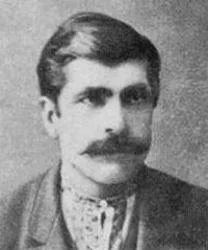
Vittorino Colombo
- From Albiate to Parliament
- Ministerial responsibilities
- Building ties with China
- A career of public service
Vittorino Colombo brought the outlook of a business economist and Catholic labor organizer to a long career in Italian public life. A Christian Democrat from Lombardy, he served in both houses of Parliament, held a series of cabinet portfolios and briefly became president of the Senate in 1983. He also became a prominent advocate of cultural and economic ties between Italy and China.
From Albiate to Parliament
Colombo was born on 3 April 1925 in Albiate, near Milan. He studied economics and commerce at the Catholic University of Milan, then worked in research and commercial roles for the chemical company Montecatini until 1958. His political formation came through Catholic social organizations, including the ACLI and the Milanese branch of the CISL trade union confederation. That experience connected him with debates about workers’ rights, social policy and economic development.
He was elected to the Chamber of Deputies in 1958 as a member of Christian Democracy. He served there through six legislatures before moving to the Senate in 1976. Across more than three decades in national politics, he became known as a practical parliamentarian, presenting hundreds of legislative proposals and taking on a range of government responsibilities.
Ministerial responsibilities
Colombo’s first cabinet portfolio was foreign trade, which he held in 1968–69. He later served as minister of the merchant marine, health, transport, and posts and telecommunications. These assignments placed him at the center of issues that affected both everyday public services and Italy’s commercial connections abroad. His repeated appointments reflected the governing Christian Democrats’ reliance on experienced officials who could work across different policy areas.
In 1983, after the death of Senate president Tommaso Morlino, Colombo was elected to lead the upper chamber. He served from 12 May until the end of that legislature on 11 July. The term was short, but the office capped a career spanning the Chamber, the Senate and several administrations.
Building ties with China
Colombo’s interests extended beyond parliamentary politics. He chaired the Italian-Chinese Institute for Economic and Cultural Exchanges and the Italian Chamber of Commerce in China, helping create channels for contact with leaders of the People’s Republic of China. He wrote about foreign trade, economic planning and China’s development, including books such as La Cina verso il 2000 and Incontri con la Cina.
The relationship reflected his broader interest in economic diplomacy: he saw trade and cultural exchange as tools for building durable international ties. In Italy, he also wrote on public health and communications, taking up questions such as the organization of medical services and the social effects of mass media.
A career of public service
Colombo remained in Parliament until 1994. He died in Milan on 1 June 1996, aged 71. His career followed Italy’s postwar transformation from reconstruction through rapid economic growth and into the political turbulence of the early 1990s. Remembered as a Christian Democrat, minister and Senate president, he was also an economist shaped by Catholic social thought and a consistent promoter of links between Italy and China.