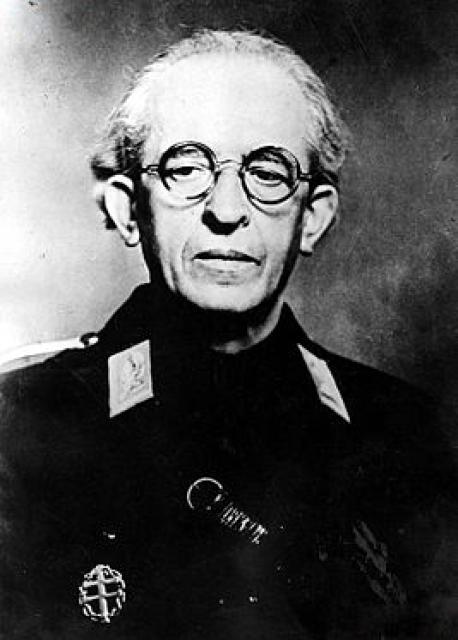
Voyteh Tuka
 Slovakia
- Vojtech Tuka: A Life in Slovak Politics
- Political Activism
- Nazi Connections
- Imprisonment and Release
- Leadership in Slovak National Party
- Proclamation of Slovak Independence
- Post-War Aftermath
Vojtech Tuka: A Life in Slovak Politics
Early Life and EducationVojtech Tuka was born in 1880 and pursued higher education at the universities of Pécs and Bratislava, earning a doctorate in law. He held professorial positions at Pécs and later Bratislava University.
Political Activism
Before World War I, Tuka became secretary of the Slovak National Party (Slovenska Ľudová Strana). In 1923, he founded the nationalist paramilitary organization Rodobrana ("Home Defense"). He played an active role in the Slovak nationalist movement, collaborating closely with Jozef Tiso.
Nazi Connections
In 1923, Tuka established connections with the Nazi Party (NSDAP). From 1926, he resided in Vienna, where he published the newspaper "Slovak Correspondence." He also served as editor-in-chief of the Slovak National Party's central organ, "Slovak."
Imprisonment and Release
Tuka was arrested in 1929 and sentenced to 15 years in prison. In 1931, the Rodobrana militia was disbanded. However, he was pardoned by the Czechoslovak president in 1937.
Leadership in Slovak National Party
After the death of Andrej Hlinka in 1938, Tuka became general secretary of the Slovak National Party. The party campaigned for the secession of Slovakia from Czechoslovakia.
Proclamation of Slovak Independence
Following the formation of the Hlinka Guard, based on the model of the SS, Tuka served as deputy chairman of the Slovak National Party from March to October 1938. After Slovakia declared independence, Tuka held various government positions, including Deputy Prime Minister, Minister of Foreign Affairs, and Prime Minister from 1939 to 1944.
Post-War Aftermath
In March 1939, Tuka signed the "Protection Treaty" with Nazi Germany. After the war, he was extradited to Czechoslovakia, tried for treason, and sentenced to death. He died in prison in 1946.