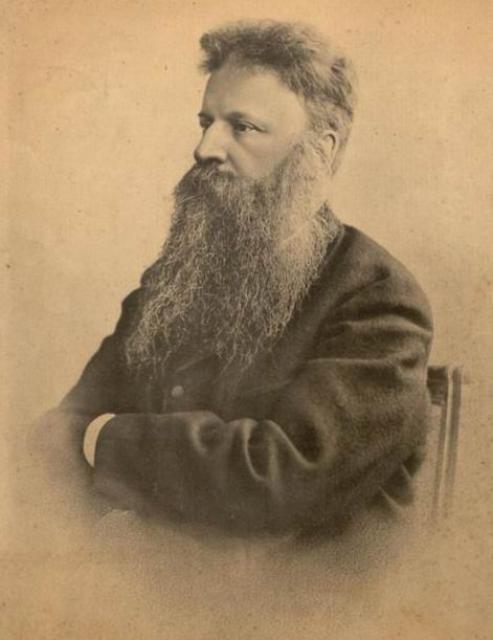
Vyacheslav Manassein
 Russia
Vyacheslav Manassein combined a physician’s clinical work with the energy of a reform-minded journalist. A student of the renowned doctor Sergei Botkin, he became a professor of internal medicine, investigated the physiology of fasting, and spent two decades shaping the influential Russian medical journal Vrach. He also argued for broader access to medical education, including for women.
Childhood and Medical Training
Manassein was born on March 15, 1841, in the Kazan region of the Russian Empire, into a provincial noble family. At 12, he was sent to St. Petersburg’s elite School of Jurisprudence, which prepared young men for government service. The bureaucratic life it promised held little appeal. He left the school as a teenager and pursued medicine instead, despite his parents’ opposition.
His path through university was turbulent. He studied medicine in Moscow and Kazan, but student unrest led to his expulsion in Kazan. He continued at the University of Dorpat (now Tartu), where his criticism of abuses in the university system brought a short arrest. In 1864 he transferred to St. Petersburg’s Medical-Surgical Academy. There, in the clinic of Sergei Botkin, he found the mentor who helped shape his approach to clinical medicine.
Research and Teaching
After graduating in 1866, Manassein remained at the academy for further study. His 1869 doctoral dissertation, Materials on the Question of Fasting, examined the body’s response to starvation. He then spent two years working in clinics and laboratories in Vienna and Tübingen before returning to Russia to teach.
Manassein advanced through the academy’s faculty, becoming a professor of pathology and therapy of internal diseases in 1876. His lectures drew students and practicing doctors alike. He taught clinical observation alongside hygiene and prevention, emphasizing the physician’s duty to patients and society. He also supported the development of women’s medical education at a time when women’s access to advanced study remained sharply restricted.
Editor of Vrach
In 1880, Manassein founded and began editing the weekly journal Vrach (The Doctor). It covered clinical medicine, public and private hygiene, professional ethics, and the everyday concerns of physicians across Russia. He edited it for roughly twenty years, and the journal became one of the country’s most widely read medical publications. A contemporary account of its history describes Manassein as carrying much of the editorial work himself, making the journal a close reflection of his interests and standards.
His public work extended beyond publishing. He helped organize financial assistance for students and doctors, and he left his large personal library to Tomsk University. He stepped down from the academy in 1891, after about 25 years of teaching; students honored his departure by carrying him out of the building.
Later Years and Legacy
Manassein died in St. Petersburg in February 1901. The journal he had built continued through the year and then ceased publication in accordance with his wishes. Remembered as both clinician and editor, he helped connect medical practice, scientific discussion, and public health in late imperial Russia. His career also reflected a conviction that medicine demanded service beyond the lecture hall and clinic: through professional debate, support for younger colleagues, and a wider path into medical study.