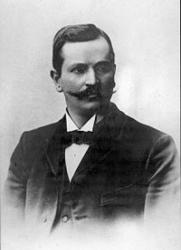
Hermann Gunther Grassmann
 Germany
- Hermann Grassmann: The Polymath
- Early Life and Education
- "Die Ausdehnungslehre" (1862)
- Political and Literary Activities
- Legacy
Hermann Grassmann: The Polymath
Hermann Grassmann was a renowned German physicist, mathematician, and philologist. Born in Stettin, Prussia (now Szczecin, Poland) on April 15, 1809, he was the son of Justus Günther Grassmann, a renowned professor of geometry, physics, and crystallography.
Early Life and Education
Grassmann initially pursued theology at the University of Berlin, successfully completing the required examinations. He briefly considered a career as a preacher but maintained a lifelong interest in the field. However, his passion for mathematics ultimately prevailed.
In 1840, Grassmann passed an additional examination to qualify as a teacher of mathematics, physics, mineralogy, and chemistry. His thesis on tidal theory contained the first glimpses of his groundbreaking work on the theory of extensions. This theory was later elaborated in his groundbreaking publications:
"Die Wissensschaft der extensiven Grosse oder die Ausdehnungsglehre" (1844)
"Die Ausdehnungslehre" (1862)
Academic CareerGrassmann's academic career spanned several institutions:
Berliner Gewerbeschule (Berlin Trade School)
Stettiner Realschule (Stettin Real School)
Stettin Gymnasium, where he succeeded his father as professor
Beyond his mathematical pursuits, Grassmann also devoted considerable time to philology and oriental languages, including Chinese and Sanskrit. His contributions to linguistics include:
The formulation of Grassmann's Law, a rule governing aspiration in ancient Greek and Sanskrit (1863)
Translations of the Rigveda into German and a dictionary of the Rigveda
Political and Literary Activities
Grassmann actively engaged in public life:In 1848, he opposed the revolutionary movement in Berlin through his writings
Together with his brother Robert, he founded a newspaper that addressed contemporary social and political issues
Legacy
Grassmann left an indelible mark on various academic disciplines:Mathematics:His pioneering work on the theory of extensions laid the foundation for vector analysis and linear algebra.
Physics:His research on tidal theory advanced the understanding of celestial mechanics.
Philology:Grassmann's contributions to linguistics, particularly his law of aspiration, continue to be influential in the study of Indo-European languages.