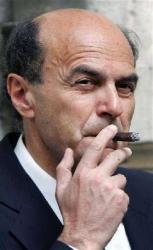
Wilhelm Burgdorf
 Germany
Biography of Wilhelm Burgdorf
Wilhelm Burgdorf was a German officer and infantry general, born on February 15, 1895, in Fürstenwalde, Germany. At the age of 19, he joined the Imperial Army and was transferred to the 12th Guard Regiment on April 18, 1915, with the rank of lieutenant. After the war, Burgdorf remained in the army and by 1937, he became the adjutant to the 9th Military District (IX Corps) in Kassel. In August 1938, he was promoted to oberstleutnant.
During the early days of the war, Burgdorf served on the inactive Western Front. Shortly before the invasion of France, he was appointed commander of the 529th Infantry Regiment, which successfully marched through Belgium and France in 1940. From April 4, 1941, to 1942, his regiment participated in fierce battles on the Eastern Front. Burgdorf, who was promoted to colonel in September 1940, was appointed Chief of Personnel Management in the army. In October 1943, he was promoted to lieutenant general.
It is no doubt that his absolute loyalty to the NSDAP greatly contributed to his rapid advancement in his military career. His involvement in the failure of the Stauffenberg plot to assassinate Hitler also played a role in his further promotion, as he actively participated in the executions of the conspirators.
During the explosion in the "Wolf's Lair," General Rudolf Schmundt, the chief adjutant of the Wehrmacht to Hitler and head of the Army Personnel Office, was fatally wounded. Schmundt was taken to the Rastenburg hospital, where he died on October 1, 1944. Hitler appointed Burgdorf as his successor. Adolf Hitler demanded a quick and cruel punishment for the conspirators. One of the victims was Field Marshal Erwin Rommel, the popular military commander known as the "Desert Fox," who was implicated in the conspiracy.
Burgdorf was entrusted with a secret mission by General Keitel: to present Rommel with witness testimonies accusing him of "treason against the state." If the allegations were proven true, Rommel, who was beloved by the people, would have the choice to commit suicide or face a public trial. Burgdorf, along with General Ernst Maisel, went to Rommel's home on October 14, armed with a letter and a box of poison. To their surprise, Rommel admitted his involvement in the plot to overthrow Hitler. Burgdorf presented Rommel with the possible choices. Rommel chose to take the poison and died an hour later.
As the new Chief of Personnel Management in the Army and a co-conspirator in the murder of one of Hitler's enemies, Burgdorf became part of Hitler's inner circle and remained by his side until the very end. Hitler acknowledged Burgdorf's loyalty by promoting him to general of infantry on November 1, 1944. Furthermore, based on Burgdorf's recommendation, Hitler appointed General Hans Krebs as Chief of the General Staff, replacing Generaloberst Heinz Guderian.
Wilhelm Burgdorf was known for his stubbornness and cruelty, as well as his love for alcohol. Due to his fanatical devotion to Nazism, he was despised by a large part of the officer corps. In the last two months of the war, Burgdorf did everything in his power to maintain order, refusing to believe that the situation in Berlin was hopeless. Joseph Goebbels noted on March 13, 1945, "The Army Personnel Management is the only organization in the Wehrmacht where perfect order is maintained, and there is absolutely nothing to criticize. There can be no doubt that General Burgdorf is doing an excellent job." Despite Hitler's frequent outbursts towards army officers, SS officers, and even old, loyal party members, there is no evidence of him being displeased with Burgdorf. In the final days of the Reich, Burgdorf became close with Goebbels and Martin Bormann. Particularly, Burgdorf and Bormann got along well, as they were seen dancing and drunkenly shouting about the treachery of the field marshals during a reception in Rastenburg.
On April 8, 1945, Burgdorf confessed to Krebs, "Since I started this job nearly a year ago, I have invested all my energy and faith into it. I did everything I could to unite the army and the party... In the end, they accused me of betraying the interests of the German officer corps and now I see that the accusations were justified, that my work was in vain, and my faith was not only mistaken but also naive and foolish."
However, Burgdorf soon emerged from this state of depression and remained loyal to Hitler and Nazism until the very end. When the Soviet forces closed in on Berlin, Burgdorf made it clear to everyone that he would stay in the bunker. He was among those present during Hitler's farewell before his suicide. Burgdorf, Krebs, and the SS bodyguards were the only ones who remained in the bunker after Hitler's death. It is believed that Burgdorf and Krebs shot themselves in the basement of the Reich Chancellery on May 1, 1945, shortly before the arrival of the Russians. Their bodies were lost amidst the chaos surrounding the fall of Berlin, and the exact location of their final resting place remains unknown.